A Collector’s Guide to the Most Historic Hotels in Downtown Boston

For history enthusiasts, preservationists, and luxury travelers alike, Boston represents a living archive of American progress. While its brick-paved streets tell the story of revolution and intellectual renaissance, the city’s architectural evolution is perhaps best preserved within its grand hospitality landmarks. Choosing where to stay in Downtown Boston is more than a matter of selecting amenities; it is an curation of historical eras.
This collector’s guide explores the premier historic properties in downtown Boston and its immediate, walkable borders, highlighting the legendary structures that seamlessly blend nineteenth-century craftsmanship with contemporary luxury.
1. Omni Parker House: The Ultimate Living Legend
An Unbroken Timeline of American Hospitality
BOSTON — Established in 1855 by visionary hotelier Harvey D. Parker, the Omni Parker House stands proudly as the longest continuously operating hotel in the United States. Nestled at the corner of School and Tremont Streets along the iconic Freedom Trail, this property serves as the cornerstone of Boston’s hospitality legacy. While the original mid-nineteenth-century structure was replaced by the current grand 14-story building in 1927, the hotel retains its deep, old-world character, featuring rich oak-paneled walls, gleaming crystal chandeliers, and polished bronze elevators.
Literary Giants and Political Dynasties
The corridors of the Parker House have hosted a staggering array of historical figures. During the nineteenth century, it served as the monthly meeting ground for the Saturday Club, a literary circle featuring Ralph Waldo Emerson, Henry Wadsworth Longfellow, and Nathaniel Hawthorne. Charles Dickens famously occupied a suite here for five months in 1867, practicing his first American reading of A Christmas Carol in front of a large mirror that remains on display in the hotel’s history gallery today.

In the twentieth century, the hotel shifted from a literary hub to a political epicenter. A young John F. Kennedy proposed to Jacqueline Bouvier at Table 40 inside Parker’s Restaurant, and later delivered his first congressional campaign speech within these walls. Curiously, the property also served as an unexpected stepping stone for global figures before they reached the world stage: both Ho Chi Minh and Malcolm X were employed here in the culinary departments during their formative years.
Culinary Inventions
A true collector cannot visit the Omni Parker House without indulging in its legendary contributions to American cuisine. The hotel’s kitchen is the documented birthplace of:
-
The Boston Cream Pie: Declared the official dessert of Massachusetts, invented here in 1865.
-
The Parker House Roll: A famously soft, buttery, folded yeast roll that became a nationwide staple.
-
The Term “Scrod”: Coined by the hotel chef to denote the freshest, catch-of-the-day young whitefish.
2. The Langham, Boston: A Financial Fortress Transformed

Banking Architecture Reborn
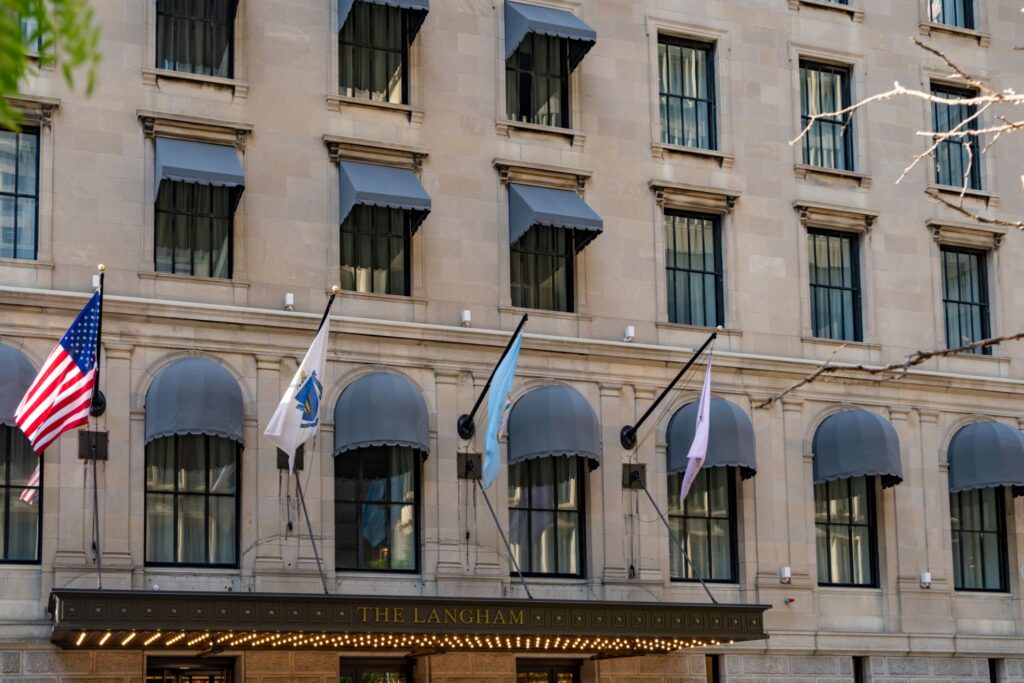
BOSTON — Located in the heart of the Financial District, The Langham, Boston offers guests a rare opportunity to sleep inside a designated architectural monument. Built in 1922, the Renaissance Revival building originally served as the Federal Reserve Bank of Boston. The property was meticulously converted into a luxury hotel in 1981, under the strict oversight of the Boston Landmarks Commission, ensuring its historic exterior and structural integrity remained perfectly preserved.
Grand Interior Details
The building’s financial heritage is reflected in its jaw-dropping scale and materials. The imposing granite and limestone facade opens into an interior defined by soaring ceilings, dramatic marble staircases, and original terrazzo floors. The hotel’s premier cocktail lounge, The Fed, sits precisely where high-security banking transactions once occurred, offering a playful nod to the building’s past.
The preservation extends to the building’s artwork. The Langham houses a curated collection of 268 pieces, including original twentieth-century masterworks by N.C. Wyeth that depict the history of banking and commerce, seamlessly integrating American history into a five-star guest experience.
3. Fairmont Copley Plaza: The Grand Dame of Copley Square
Gilded Age Opulence
BOSTON — Situated just steps outside the official downtown boundary in neighboring Back Bay, the Fairmont Copley Plaza represents the zenith of Boston’s Gilded Age architecture. Opened in 1912 on the original site of the Museum of Fine Arts, the hotel was designed by Henry Janeway Hardenbergh—the legendary architect behind New York’s Plaza Hotel. Its limestone facade features a masterful blend of French and Venetian Renaissance influences, creating a commanding presence on Copley Square.
The Lobby of Presidents
Upon entering, guests walk through “Peacock Alley,” a 300-foot-long grand entrance hall defined by gilded, coffered ceilings, trompe l’oeil paintings, and imported marble columns. For over a century, this lobby has been the epicenter of Boston’s high society, hosting every U.S. President since William Howard Taft, alongside international royalty and global dignitaries. The rooms pair this regal heritage with modern accents, offering expansive views of Trinity Church and the Boston Public Library.
4. XV Beacon: Beaux-Arts Brilliance on Beacon Hill
Turn-of-the-Century Prestige
BOSTON — Perched on the gaslit streets of the historic Beacon Hill neighborhood, immediately adjacent to downtown, XV Beacon is housed within a majestic 1903 Beaux-Arts building. The structure features a striking limestone facade, a classic grid of multi-paned windows, and a heavy copper cornice that reflects the stately civic architecture of turn-of-the-century Boston.
Bespoke Preservation
Inside, the boutique property juxtaposes an extensive collection of ancient Roman and contemporary abstract art against its preserved architectural bones. A historic, open-cage grillwork elevator—one of the few operational models left in the city—transports guests to refined rooms equipped with working gas fireplaces, cashmere throws, and original crown moldings. It remains a masterclass in how to honor historic bones while providing an intimate, residential-style luxury experience.
Historic Hotel Comparison at a Glance
For collectors planning their itinerary, Boston’s historic hotels offer distinct entry points into the city’s past:
| Hotel | Architectural Style | Historic Era | Key Historical Milestone |
| Omni Parker House | French Chateau / 1920s Grandeur | 19th Century Literary & 20th Century Politics | America’s longest continuously operating hotel; Birthplace of Boston Cream Pie. |
| The Langham, Boston | Renaissance Revival | 1920s Industrial & Financial Expansion | Meticulously adapted from the original 1922 Federal Reserve Bank. |
| Fairmont Copley Plaza | French & Venetian Renaissance | Gilded Age Opulence (1912) | Designed by Henry Janeway Hardenbergh; hosted every U.S. president since Taft. |
| XV Beacon | Beaux-Arts | Edwardian Prestige (1903) | Features an authentic, functioning 1903 open-cage elevator and original fireplaces. |
Follow stateupdate.co.ke for more newsupdates

Stateupdate Media Group |SMG
Contributor at State Update.
Related News

Quality Over Compromise: MP Stephen Mogaka Demands Top Standards for West Mugirango Roads

Remote Jobs in 2025 For Kenyans: Top Online Works and How to Land Them

SHA Unveils a New Framework Allowing Kenyans to Seek Medical Services Abroad For Conditions Unavailable Locally

Truth Emerges On Oburu’s Health Amid Concerns & Speculations

From Kenya to Canada: How Kenyan Chef Shem Keburi Built an International Career

New Twist In Rachel Wandeto Murder Case As Detectives Make New Move
Latest News

Martha Karua Set to Grace Nakuru as PLP Opens New Offices, Farmers Party Joins Opposition Camp

Ugandans in Kenya Warned After Ruto’s Urgent Directive

Mount Kenya Hawkers Accused of Double Standards Over Ruto’s Foreign Traders Directive: Senator Samson Cherargei Sparks Debate

CS Joho and MP Sudi Deliver Ruto’s Condolences to Tanzania’s President Samia

Kenyans In Burundi Sent A Strong Message By The Government