3 Dead, 75 Cases Of Hantavirus Recorded WHO Issues Warning

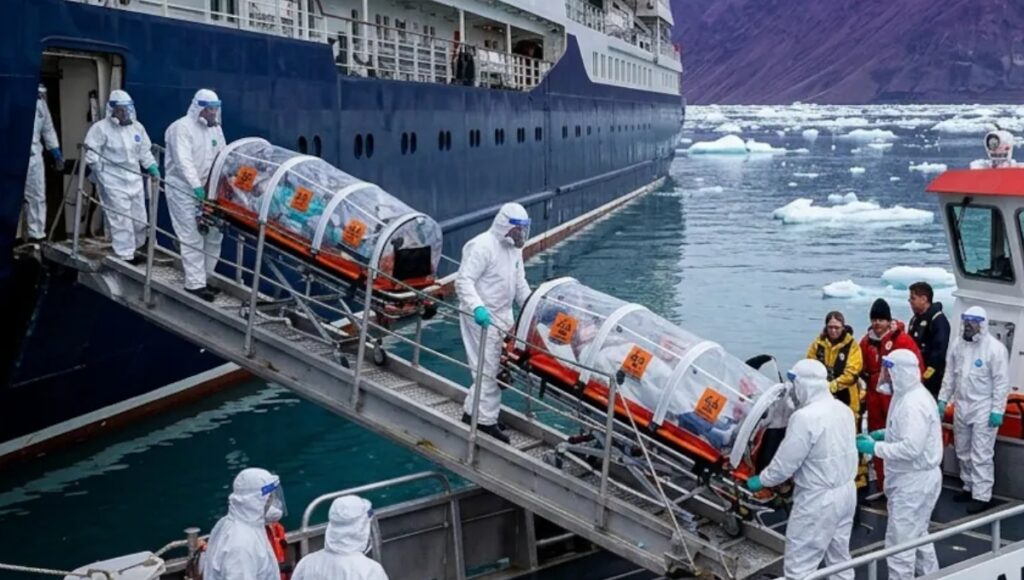
The World Health Organization (WHO) has confirmed eight cases of hantavirus linked to the MV Hondius cruise ship, including three fatalities. Six of the cases have been laboratory-confirmed as Andes virus (ANDV), while four patients remain hospitalized. Authorities have identified 75 contacts in South Africa, with 42 already traced and placed under monitoring.
According to WHO, one suspected case was ruled out after testing negative through both PCR and serology tests. Investigations are ongoing into the source of exposure, with particular focus on the travel history of the index case—an adult male who disembarked in Tristan da Cunha on April 14. He remains stable in isolation as a probable case pending further confirmation.
WHO has deployed personnel aboard the MV Hondius, including an expert from the European Centre for Disease Prevention and Control (ECDC), to support passengers, crew, and ship operators. Technical guidance has been issued to affected countries covering outbreak management, safe disembarkation procedures, and follow-up protocols. The organization continues to emphasize enhanced surveillance, early detection, isolation of suspected cases, and strict infection prevention measures. Current evidence does not support routine testing or quarantine of asymptomatic contacts.
Hantavirus was first recognized during the Korean War in the early 1950s, when thousands of United Nations troops developed hemorrhagic fever with renal syndrome (HFRS). The virus is carried by rodents, particularly field mice and rats, and spreads to humans through contact with urine, droppings, saliva, or contaminated dust.
Over time, different strains have been identified across the globe. In Asia and Europe, hantaviruses typically cause HFRS, which affects the kidneys and can lead to bleeding disorders. In the Americas, hantaviruses cause hantavirus cardiopulmonary syndrome (HCPS), a severe respiratory illness with a fatality rate of up to 50 percent.
The Andes virus, found in South America, is unique among hantaviruses because it can spread from person to person under close contact. Documented outbreaks in Argentina and Chile have shown this rare transmission route, making the current MV Hondius outbreak particularly concerning for health authorities.
Hantavirus infections typically begin with flu-like symptoms such as fever, fatigue, muscle aches, headaches, and dizziness. Gastrointestinal issues like nausea, vomiting, and abdominal pain are also common. In severe cases, patients may develop respiratory distress as the lungs fill with fluid, or kidney failure in the case of HFRS.
Fatality rates vary depending on the strain: HCPS can be fatal in 20–50 percent of cases, while HFRS ranges from 1–15 percent. There is currently no vaccine or specific antiviral treatment, making supportive care—such as oxygen therapy and dialysis—critical for survival.
The outbreak aboard the MV Hondius highlights the vulnerabilities of cruise ship travel, where close quarters can accelerate the spread of infectious diseases. WHO has stressed the importance of international cooperation under the International Health Regulations (IHR) to ensure rapid response and containment.
Public health messaging remains clear: while the risk to the general population is considered low, vigilance is essential. Authorities are urging enhanced rodent control measures, safe cleaning practices, and strict adherence to infection prevention protocols.
The MV Hondius outbreak serves as a reminder of the unpredictable nature of zoonotic diseases and the importance of global preparedness. With three lives already lost and several patients still hospitalized, the incident underscores the need for swift international coordination, robust surveillance, and continued research into hantaviruses—particularly the Andes virus, with its rare human-to-human transmission potential.

Stateupdate Media Group |SMG
Contributor at State Update.
Related News
Seeds of Change – How Indigenous Crops Are Powering Kenya’s Climate-Resilient Future

ODM and UDA Lay Groundwork for 2027 Coalition Through 10-Point MoU

Pacific Panoramas: The Best High-End Hotels in Seattle USA with Views of Puget Sound 2026 Guide

Butere Girls’ High School KCSE 2024 Results: Performance Analysis and Grade Distribution

USA: Climate Change and Corpus Christi’s Water Crisis: A Warning for Industry-Heavy Cities

Honoring Our Freedom: Madaraka Day Message from Wakili Stephen Mogaka, MP West Mugirango
Latest News
Martha Karua Set to Grace Nakuru as PLP Opens New Offices, Farmers Party Joins Opposition Camp

Ugandans in Kenya Warned After Ruto’s Urgent Directive

Mount Kenya Hawkers Accused of Double Standards Over Ruto’s Foreign Traders Directive: Senator Samson Cherargei Sparks Debate
CS Joho and MP Sudi Deliver Ruto’s Condolences to Tanzania’s President Samia

Kenyans In Burundi Sent A Strong Message By The Government