How Solar-Powered Climate-Smart Farming Is Reshaping Africa’s Agricultural Future and Advancing Safe Sustainable Food Systems

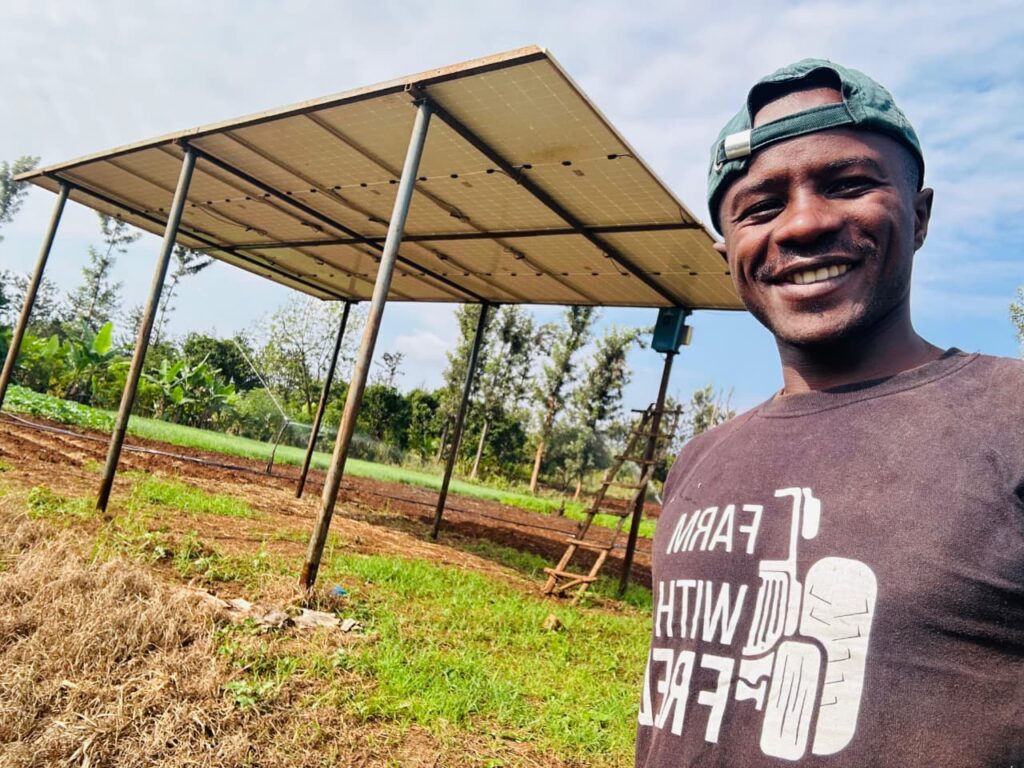
The morning mist still hung lightly above the waters of River Sagana when we arrived at the border of Murang’a and Kirinyaga counties, where rows of thriving green crops stretched across the landscape beneath the soft glow of the rising sun.
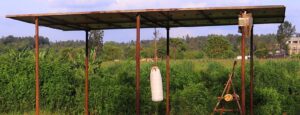
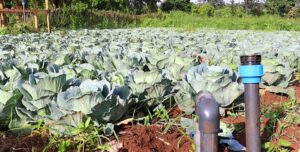
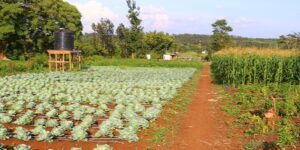
From a distance, the farm appeared unusually organized. Drip irrigation lines ran neatly between vegetable beds. Water tank stood strategically at his vegetable farm. Birds moved across indigenous trees planted around the farm to reduce soil erosion and regulate temperatures.
One of the most striking features of the Farm with Fred operation is its dependence on solar power infrastructure.
Nearly every major system on the farm is integrated with renewable energy technology.
Mar 21, 2026
Solar panels generate electricity for irrigation pumps, security systems, communication equipment, greenhouse operations, lighting, and water distribution systems.
For Fred, the decision to invest heavily in solar energy was both economic and environmental.
“This farm is a demonstration of the future,” he told Stateupdate Media. “Climate change is forcing agriculture to evolve. Farmers who ignore sustainability, renewable energy, and water conservation will struggle to survive in the coming years.”
“Fuel prices are unpredictable. Electricity costs keep rising. Farmers need systems they can sustain long term,” he said while inspecting one of the solar-powered pumping units.

Across Africa, rising energy costs continue placing pressure on agricultural production.
His organic vegetable farm thrives on a simple yet powerful innovation: combining solar energy with drip irrigation to conserve water and boost yields.
“We pump 30,000 liters of water per hour from the river using solar power,” Fred explains, standing beside the humming pump. “This system allows us to irrigate multiple crop blocks efficiently, even under the scorching sun.”
According to the Kenya Agricultural and Livestock Research Organization (KALRO), solar irrigation can cut water pumping costs by up to 60% compared to traditional fuel-powered systems. For smallholder farmers, this translates into more affordable production and sustainable growth.
Diesel-powered irrigation systems remain expensive to operate, especially for small-scale and medium-sized farmers already struggling with high fertilizer prices and climate-related losses.
Renewable energy experts increasingly argue that solar-powered agriculture may become one of the continent’s most important adaptation tools.
According to the International Renewable Energy Agency (IRENA), solar irrigation technologies can significantly reduce operational costs while improving climate resilience and reducing greenhouse gas emissions.
The agency notes that solar-powered systems are particularly effective in rural farming regions where electricity access remains unreliable or expensive.
For Farm with Fred, renewable energy has transformed how the farm operates.
“Once you install solar, the sun becomes your fuel,” Fred explained. “That changes production economics completely.”
A visit to his farm come at a critical moment for African agriculture.
Across East Africa, farmers are facing increasingly unpredictable rainfall patterns, prolonged droughts, rising temperatures, soil degradation, and escalating production costs. Scientists warn that climate change is already disrupting food systems across the continent, threatening both food security and rural livelihoods.
According to the Intergovernmental Panel on Climate Change (IPCC), sub-Saharan Africa remains one of the regions most vulnerable to climate-related agricultural disruptions due to its heavy dependence on rain-fed farming systems.
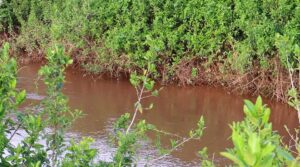
Yet on this farm along the banks of River Sagana, Fred believes adaptation is not only possible — it is already happening.
As we toured the farm, one message surfaced repeatedly: water management is now central to agricultural survival.
Unlike traditional flood irrigation methods still used in many rural farming areas, Farm with Fred relies heavily on drip irrigation systems designed to deliver precise amounts of water directly to plant roots.
The system dramatically reduces water waste while maintaining consistent crop growth.
“Rainfall patterns are no longer reliable,” Fred said. “Farmers can no longer depend entirely on seasons behaving normally.”
His concerns reflect growing scientific warnings about climate instability in East Africa.
Recent droughts across the Horn of Africa have devastated livestock populations, destroyed crops, and pushed millions toward food insecurity.
The United Nations estimates agriculture accounts for nearly 70 percent of global freshwater use, making efficient irrigation technologies increasingly critical for sustainable food systems.
Research on solar-powered irrigation systems in sub-Saharan Africa suggests renewable-powered irrigation could significantly improve food security while helping farmers adapt to worsening drought conditions.
Climate experts say combining solar energy with precision irrigation technologies may become one of the most important agricultural transitions in Africa’s future.
Dr. Esther Ngumbi, Kenyan agricultural scientist and climate resilience researcher, has repeatedly emphasized the urgency of climate-smart farming adaptation.
“Climate-smart agriculture is no longer optional,” Ngumbi said during a recent agricultural resilience conference. “Farmers must adopt systems that conserve water, improve productivity, and protect ecosystems.”
At Farm with Fred, that philosophy shapes nearly every operational decision.
Water harvesting systems store reserves during rainy periods. Organic soil management practices improve moisture retention. Indigenous vegetation is preserved around parts of the farm to support biodiversity and environmental balance.
The result is a farming system built specifically around resilience.
Beyond renewable energy and irrigation systems, Farm with Fred has become increasingly known for advocating safer and more sustainable food production practices.
As we moved through vegetable sections cultivated under reduced-chemical systems, Fred spoke passionately about the dangers of excessive pesticide use in modern agriculture.
“We do not produce what we ourselves cannot eat,” he said firmly.
According to the World Health Organization, millions of pesticide poisoning cases occur globally every year, with developing countries carrying a disproportionately high burden due to weaker regulation and inadequate safety measures.
Fred believes many farmers unknowingly expose themselves, consumers, and ecosystems to dangerous chemicals while pursuing short-term production gains.
“Toxic chemicals may increase yields temporarily, but they also destroy soil health, pollute water systems, and create health risks,” he argued.
Farm with Fred instead promotes safer agricultural alternatives including composting, biological pest control, crop rotation, organic fertilizers, and reduced dependency on synthetic chemical inputs.
Environmental researchers increasingly support such systems.
The IPCC has warned that unsustainable industrial agriculture practices contribute significantly to environmental degradation, biodiversity loss, and climate instability.
For Fred, sustainable farming must protect both productivity and public health.
“You cannot separate healthy farming from healthy people,” he said.
Throughout the day, several young farmers arrived at the property seeking guidance on irrigation systems, greenhouse management, organic farming, and solar installation.
Some recorded videos for social media. Others took notes while asking questions about costs, profitability, and climate adaptation.
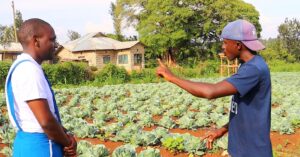
Fred believes the future of African agriculture depends heavily on attracting young people into modern farming systems.
“The next generation of farmers must combine agriculture with technology,” he said. “The future farmer is not just someone holding a jembe. The future farmer understands solar systems, water management, digital marketing, climate science, and business.”
Across Africa, youth unemployment continues rising while agricultural sectors struggle with aging farmer populations.
Yet experts increasingly argue that climate-smart agriculture, renewable energy systems, and agritech innovation could become major employment drivers if properly supported.
For Farm with Fred, the mission extends beyond personal success.
The goal, Fred says, is to help transform how Africa thinks about farming itself.
Not as backward labor.
Not as survival.
But as science, sustainability, entrepreneurship, and environmental stewardship combined.
As evening sunlight reflected across the solar panels powering irrigation systems beside River Sagana, the vision behind Farm with Fred became increasingly clear.
A future where African farms are powered by renewable energy.
Where food production protects ecosystems instead of destroying them.
Where young people see farming not as failure, but as innovation.
And where climate-smart agriculture becomes one of the continent’s strongest tools against poverty, food insecurity, and climate change.
“The future of Africa,” Fred said quietly as the farm settled into the evening calm, “will depend on how we grow our food.”

Job Maangi| Reporter
Contributor at State Update.
Related News

Ruto Storms Mt Kenya as Major Projects Unveiled in High-Stakes Tour

“Jembe Mpya ’’ Hon. Robinas Makana Sparks a New Dawn for Nakuru Town West!

Six Feared Dead in Early Morning Crash at Soysambu on Nakuru–Nairobi Highway

Rigathi Gachagua Dismisses Raila Odinga’s Dialogue Call, Labels Him a Political Hypocrite
New Leadership at Moi University: Education CS Ogamba Restructures Moi University Council, Introduces New Appointments

Sifuna Discloses True Sources Funding Linda Mwananchi Rallies, Refutes Uhuru Links
Latest News

Martha Karua Set to Grace Nakuru as PLP Opens New Offices, Farmers Party Joins Opposition Camp

Ugandans in Kenya Warned After Ruto’s Urgent Directive

Mount Kenya Hawkers Accused of Double Standards Over Ruto’s Foreign Traders Directive: Senator Samson Cherargei Sparks Debate

CS Joho and MP Sudi Deliver Ruto’s Condolences to Tanzania’s President Samia
Kenyans In Burundi Sent A Strong Message By The Government