Inside the Vision of Kenyan Agripreneur Fred Munene and the Growing Push for Climate Smart, Safe, Sustainable Food Systems

By Job Maangi
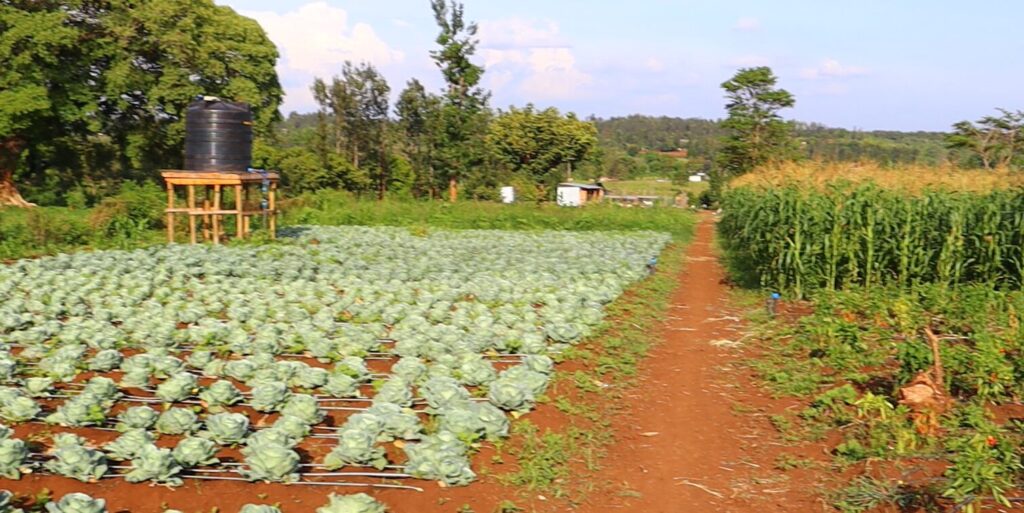
As dawn breaks over the fertile highlands of central Kenya, solar panels glisten above rows of vegetables nourished by carefully calibrated drip irrigation lines. Water moves quietly through pipes powered not by diesel generators, but by sunlight. Sensors monitor moisture levels. Rainwater harvesting tanks stand beside greenhouses engineered to conserve resources in an era of rising climate uncertainty.
This is not a government demonstration farm or a foreign-funded research station.
It is the working model of Fred Munene — widely known across East Africa as “Farm with Fred” — a farmer, agricultural trainer, digital educator, and climate-smart farming advocate whose rise from poverty to becoming one of the region’s most influential agripreneurs is increasingly capturing national attention.
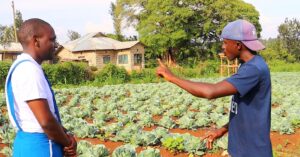
In an extensive interview with Stateupdate Media, Fred outlined a bold and urgent argument: Africa’s agricultural future will not be saved by outdated farming methods, politically driven subsidies, or dependency on imported food systems. Instead, he believes the continent’s transformation lies in renewable energy, smart irrigation, digital agricultural education, safe food production, and a radical shift in mindset among young people.
“We are sitting on one of the richest agricultural regions on earth, yet we continue behaving like consumers instead of producers,” Fred said during the interview. “Africa can feed itself and feed the world if we embrace innovation, sustainability, and accountability.”
His remarks arrive at a time when agriculture across Africa faces mounting pressure from climate change, rising production costs, shrinking arable land in some regions, prolonged droughts, and increasing concerns over food safety.
According to the United Nations Food and Agriculture Organization (FAO), Africa’s food import bill could exceed $100 billion annually by 2030 if structural agricultural challenges remain unresolved. At the same time, the African Development Bank estimates that the continent holds nearly 60 percent of the world’s uncultivated arable land, positioning Africa as one of the most strategically important agricultural frontiers globally.
Against this backdrop, climate-smart farming is increasingly being viewed by policymakers, scientists, and agribusiness experts as not only an environmental necessity, but also a major economic opportunity.
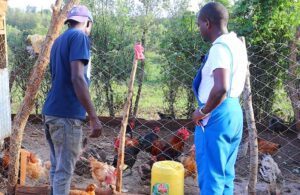
Growing up in rural Kenya, poverty defined much of his early life. He recalls walking barefoot throughout primary school and only wearing his first pair of shoes upon entering secondary school.
“There were days when survival itself felt like the main assignment,” he recalled.
Yet even in childhood, he displayed a stubborn refusal to remain silent in the face of injustice. That defiant character eventually led to conflict with school administrators while he was in Form Three. After openly challenging management over student welfare concerns, Fred was expelled from school.
The incident temporarily derailed his academic journey and forced him into manual labor at construction sites to survive.
For many rural youths in similar circumstances, such setbacks often become permanent barriers to advancement. But Fred describes the period differently.
“It taught me resilience,” he said. “I learned that circumstances can delay you, but they do not have to define you.”
Eventually, he enrolled at Yata School of Agriculture in Machakos, where he studied agronomy and developed a deeper understanding of crop science, soil management, and commercial farming systems.
The experience exposed him to agriculture not as subsistence labor, but as a scalable economic enterprise capable of transforming livelihoods.
According to the International Labour Organization (ILO), agriculture remains the single largest employer across sub-Saharan Africa, supporting more than half of the region’s workforce either directly or indirectly. Yet despite its importance, the sector continues struggling with low mechanization, weak extension services, and limited youth participation.
Fred believes perception is one of the biggest barriers.
“For many young Africans, agriculture has been presented as punishment instead of opportunity,” he said. “People graduate and wait years for office jobs while ignoring the land around them.”
A major turning point in Fred’s career came in 2015 when he joined a Dutch-sponsored greenhouse automation project in Kajiado County.
The project exposed him to advanced agricultural technologies that were still uncommon in many parts of Kenya at the time: automated irrigation systems, environmental sensors, controlled greenhouse environments, and precision agriculture techniques driven by data analytics.
For Fred, the experience was transformative.
“I realized agriculture was becoming a science-driven industry,” he explained. “The future farmer would not just use a hoe. The future farmer would understand technology, data, water efficiency, and energy systems.”

The project also introduced him to artificial intelligence applications in farming long before AI became mainstream in public conversation.
Globally, precision agriculture is rapidly changing food production systems. Technologies such as AI-powered crop monitoring, satellite imagery, automated irrigation scheduling, and predictive climate analytics are increasingly helping farmers improve yields while reducing resource waste.
The World Bank has identified climate-smart agriculture as one of the most critical strategies for protecting food systems against climate-related shocks. Climate-smart farming integrates productivity enhancement, climate adaptation, and environmental sustainability simultaneously.
Experts argue that such systems are particularly vital in Africa, where rain-fed agriculture dominates and climate variability continues intensifying.
Dr. Ruth Oniang’o, Kenyan nutritionist and food security expert, has repeatedly warned that climate instability is now directly threatening food production and public health across East Africa.
“We can no longer separate agriculture from climate discussions,” Oniang’o said during a regional food systems forum. “The future of food security depends on how quickly we adapt.”
Despite securing a lucrative agricultural management position after gaining industry experience, Fred made a decision that shocked many colleagues and relatives: he resigned.
At the time, he was earning a salary few agricultural professionals in Kenya attain.
But he increasingly felt constrained by corporate structures and wanted to build something larger than personal career advancement.
“There comes a point where comfort becomes the enemy of purpose,” he said.
His decision reflected a growing trend among younger African entrepreneurs who are increasingly abandoning traditional career paths in favor of independent enterprise, digital education, and agribusiness innovation.
On January 1, 2021, Fred officially launched the “Farm with Fred” digital platform, creating separate channels dedicated specifically to agricultural education, climate-smart farming, and agribusiness mentorship.
Initially, the platform grew slowly.
There were no major investors, aggressive advertising campaigns, or viral celebrity collaborations.
Instead, Fred focused on relentless consistency.
Every day, he produced educational content covering livestock management, greenhouse farming, irrigation systems, crop diseases, agribusiness strategy, food safety, and sustainable farming practices.
Over time, the audience expanded dramatically.
Today, the Farm with Fred platform commands an audience exceeding one million followers across multiple social media channels, making it one of East Africa’s most influential independent agricultural education brands.
According to the International Food Policy Research Institute (IFPRI), digital agricultural platforms are increasingly filling critical knowledge gaps left by overstretched government extension services. Farmers can now access training, weather updates, disease alerts, and market information directly through mobile devices.
Fred describes his growth philosophy using what he calls “the Principle of Paul” — the compounding effect of consistent daily effort.
“Success online is not magic,” he said. “It is repetition, discipline, and serving people consistently.”
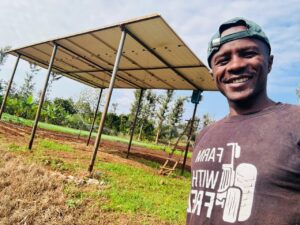
Perhaps the most distinctive feature of Fred’s farming system is its heavy reliance on solar power infrastructure.
Solar panels installed across the farm generate electricity for lighting, water pumps, communication systems, surveillance equipment, and irrigation operations.
For Fred, renewable energy is not simply about environmental consciousness. It is about long-term economic survival.
“Diesel costs keep increasing. Electricity tariffs keep rising. Farmers cannot continue operating with unpredictable energy expenses,” he explained.
Kenya has emerged as one of Africa’s leading renewable energy economies, with significant investments in geothermal, wind, and solar infrastructure over the past decade. Yet many rural agricultural communities still experience unstable electricity access.
Solar-powered irrigation systems are increasingly being adopted as alternatives to expensive fuel-dependent pumping systems.
According to the International Renewable Energy Agency (IRENA), solar irrigation technologies can significantly lower operational costs while simultaneously reducing carbon emissions and improving climate resilience.
The economics are increasingly attractive for farmers.
Although solar installation costs remain relatively high initially, long-term operating expenses are substantially lower compared to fuel-powered systems. This becomes especially important during prolonged droughts when irrigation demand rises sharply.
Professor Patrick Verkooijen, climate adaptation expert and CEO of the Global Center on Adaptation, has argued that Africa’s climate future will depend heavily on investment in resilient agricultural infrastructure.
“Climate adaptation is no longer optional,” Verkooijen noted during an African climate summit. “It is now an economic survival strategy.”
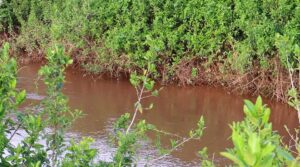
Alongside renewable energy, water conservation forms a central pillar of Fred’s climate-smart farming model.
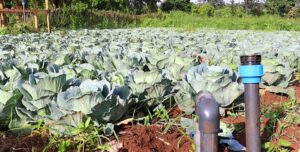
Rather than relying on traditional flood irrigation, his farm utilizes drip irrigation systems that deliver controlled amounts of water directly to crop roots.
The goal is maximum efficiency with minimal waste.
“Every drop matters now,” Fred said. “Rain patterns are no longer reliable.”
Climate scientists warn that East Africa faces increasingly unpredictable rainfall cycles driven partly by global warming and changing oceanic patterns.
The Intergovernmental Panel on Climate Change (IPCC) has identified sub-Saharan Africa as one of the regions most vulnerable to climate-related agricultural disruption. Droughts, heatwaves, flooding, and shifting planting seasons are already affecting crop productivity in several countries.
Globally, agriculture accounts for roughly 70 percent of freshwater consumption, according to the United Nations. Efficient irrigation technologies are therefore increasingly viewed as essential tools for sustainable food production.
Dr. Esther Ngumbi, Kenyan entomologist and agricultural researcher at the University of Illinois, has emphasized that water-smart agriculture will become indispensable in future African farming systems.
“Farmers must adopt technologies that conserve resources while maintaining productivity,” Ngumbi said during a climate resilience conference. “Climate-smart agriculture is not a luxury anymore. It is a necessity.”
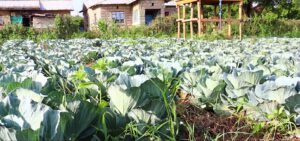
Beyond technology and renewable energy, Fred has become one of the region’s most outspoken advocates for safe food production.
He strongly criticizes the excessive and often poorly regulated use of synthetic pesticides and chemical farming inputs.
“We do not produce what we ourselves cannot eat,” he stated firmly.
His criticism reflects growing public concern about food safety standards and long-term health consequences associated with chemical exposure.
The World Health Organization estimates that millions of pesticide poisoning cases occur globally each year, with developing countries disproportionately affected because of weaker regulation, inadequate farmer training, and poor protective equipment access.
Fred’s campaign intensified after witnessing the suffering of a fellow farmer diagnosed with cancer after years of chemical exposure.
“He had wealth, land, success — but eventually all his money went into treatment,” Fred recalled.
That experience deeply shaped his philosophy around sustainable agriculture.
He rejects arguments that toxic chemicals can simply be “used safely.”
“Toxic substances remain toxic,” he argued. “You cannot normalize poison because it improves short-term yields.”
Agricultural scientists increasingly support integrated pest management systems that reduce dependence on harmful synthetic chemicals by combining biological controls, organic soil management, crop rotation, and targeted intervention strategies.
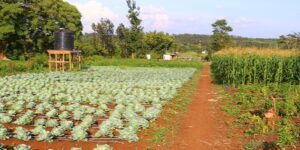
Throughout the interview, Fred repeatedly returned to one central frustration: Africa’s paradox of agricultural abundance alongside food insecurity.
Despite favorable climates and enormous land potential, many African nations remain heavily dependent on imported food products.
Fred blames weak policy frameworks, corruption, poor infrastructure, and excessive taxation on agricultural inputs.
“You cannot expect farmers to compete globally when machinery, irrigation equipment, and farm inputs are heavily taxed,” he said.
He also criticized the mismanagement of agricultural development funds, alleging that resources frequently benefit consultants and administrators rather than grassroots farmers.
His concerns echo broader frustrations among African agricultural economists who argue that structural inefficiencies continue limiting the sector’s growth potential.
According to the African Development Bank, improving agricultural productivity could lift millions out of poverty while significantly reducing youth unemployment across the continent.
Fred frequently references Ukraine as an example of agricultural transformation driven by policy and infrastructure investment.
Despite experiencing harsh winters that suspend farming for months annually, Ukraine remains among the world’s leading grain exporters.
“They export food at scale,” Fred said. “Meanwhile, many African economies import products they could easily produce locally.”
For Fred, agriculture’s future ultimately depends on changing how young people perceive farming.
He believes many youths have been conditioned to associate success exclusively with formal employment rather than enterprise creation.
“People are waiting endlessly for office jobs while ignoring opportunities around them,” he said.
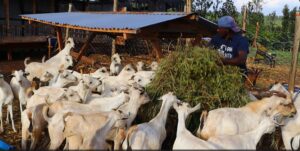
Instead, he encourages gradual entry into agribusiness through poultry, dairy farming, horticulture, or small livestock projects.
“If you can afford a smartphone and internet bundles, you can begin something small,” he argued.
Experts increasingly agree that agriculture may become one of Africa’s most important youth employment sectors if modernized effectively.
The African Union estimates that more than 20 million young Africans enter labor markets annually while formal job opportunities remain insufficient. Agribusiness, renewable energy, food processing, logistics, and digital agriculture are viewed as some of the continent’s fastest-growing economic opportunities.
Fred insists that agriculture must now be approached professionally.
“Your farm is a business,” he emphasized. “You must calculate costs, monitor margins, understand markets, and stop depending entirely on brokers.”
As global concern over climate change, food insecurity, and environmental degradation intensifies, farms like Fred’s increasingly represent more than isolated success stories.
They are becoming test cases for what African agriculture could become in the coming decades.
Solar-powered irrigation systems. Water-efficient farming. Reduced chemical dependency. Digital agricultural education. Youth-led agribusiness innovation.
Together, they form part of a broader vision for sustainable agricultural transformation.
Standing beside rows of thriving crops sustained by renewable energy infrastructure, Fred remains convinced that Africa’s agricultural destiny is far from hopeless.
“The future is not somewhere else,” he said quietly as evening settled over the farm. “The future is here. We just need the courage to build it.”

Stateupdate Media Group |SMG
Contributor at State Update.
Related News

KUCCPS Explainer: How Cut-off Points Are Set

President Ruto Intervines, Demands Justice After Death of Albert Ojwang in Police Custody, Issues a Statement

The Fate Of Oburu: Simba Arati Makes New Secret Revelation In Coded Language

David Maraga Dismisses Tribal Politics in His 2027 Presidential Bid

World’s First Pregnancy Robot Developed, Set for 2026 Launch

SHA Unveils a New Framework Allowing Kenyans to Seek Medical Services Abroad For Conditions Unavailable Locally
Latest News

Martha Karua Set to Grace Nakuru as PLP Opens New Offices, Farmers Party Joins Opposition Camp

Ugandans in Kenya Warned After Ruto’s Urgent Directive

Mount Kenya Hawkers Accused of Double Standards Over Ruto’s Foreign Traders Directive: Senator Samson Cherargei Sparks Debate

CS Joho and MP Sudi Deliver Ruto’s Condolences to Tanzania’s President Samia
Kenyans In Burundi Sent A Strong Message By The Government