Details On President Moi Security Details Emerge As Ruto’s Security Is Changed

By Stateupdate Media Group |SMGMonday, May 25, 2026 · 10:46 AM
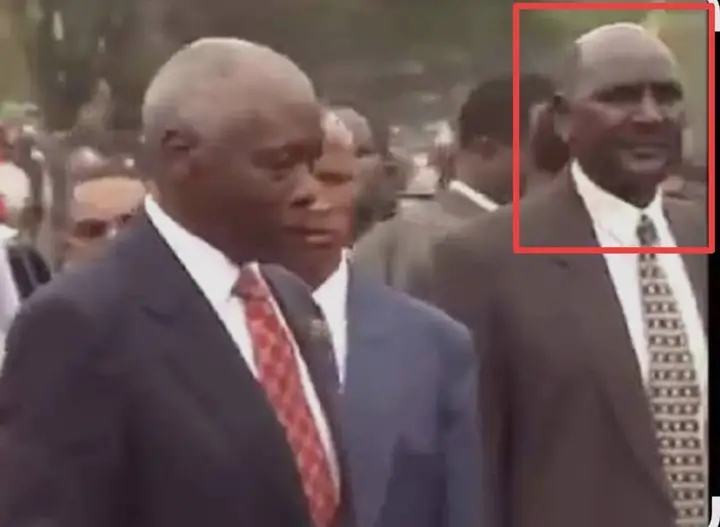
As Kenyans continue to discuss the recent security breach involving President William Ruto, a viral social media post has brought back vivid memories of the formidable security apparatus that protected former President Daniel arap Moi during his long rule.
In a post that has sparked widespread reactions, veteran commentator Wahome Thuku shared old photographs of a tall, stern-looking officer who was part of Moi’s close protection team. Describing the man’s intimidating presence, Thuku recounted how this security detail had a reputation for subtle but effective control tactics.
According to the post, the officer could discreetly step on a journalist’s or critic’s foot with his large shoe, pretending it was accidental, while ensuring the person remained immobilized without drawing public attention. “Moi had this guy. You would never go past his eyes,” Thuku wrote, highlighting the iron-fisted discipline that characterized presidential protection in that era.
The emergence of these details comes at a time when President Ruto’s own security arrangements are undergoing significant changes. On Sunday, May 24, 2026, during a thanksgiving service in Ganze, Kilifi County, a man managed to breach the security cordon, approach the dais, and even make physical contact with President Ruto.
Although the President remained calm and downplayed the incident, the lapse prompted swift action from the Inspector General of Police, Douglas Kanja.In response, the National Police Service announced immediate restructuring of the Presidential Escort Unit.
Senior Assistant Inspector General Noah Kirwa Maiyo, who served as the unit’s commandant, was transferred back to police headquarters and reassigned to the Vigilance Unit. In his place, William Sawe from the Recce Company was appointed as the new commander. These changes are aimed at tightening protocols, sealing vulnerabilities, and restoring public confidence in the President’s protection detail.The contrast between the two eras is striking.
During Moi’s presidency, from 1978 to 2002, his security team was known for its elite training, including collaboration with British SAS forces, and an almost legendary reputation for vigilance and deterrence. Officers like the one featured in the viral photos were not just bodyguards but symbols of unyielding authority.
Their imposing physical presence and tactical sharpness helped maintain order during a politically charged period marked by one-party rule and occasional dissent.President Ruto’s administration, operating in a more open democratic environment with intense media scrutiny and public engagement, faces different challenges.
The President is known for his hands-on, crowd-pulling style, often interacting closely with citizens during events such as the NYOTA programs and development tours. While this approach fosters accessibility, it has raised concerns among security experts about balancing openness with the safety of the Head of State.
Analysts note that presidential security in Kenya has evolved significantly since the Moi years. Modern threats include not only physical breaches but also sophisticated digital and intelligence risks.
The latest incident in Kilifi is not the first reported breach in recent months, prompting calls for a comprehensive review of VIP protection strategies.As the new team takes charge under Commandant William Sawe, questions linger on how the Presidential Escort Unit will adapt to ensure both effectiveness and professionalism.
The renewed interest in Moi-era security stories serves as a reminder of the high standards once expected in protecting the country’s leadership.Kenyans will be watching closely to see whether the recent shake-up leads to more robust and discreet protection for President Ruto, or if further adjustments will be necessary in the lead-up to future political seasons. In the end, effective security remains a delicate balance between safeguarding the President and preserving the democratic space that defines modern Kenya.

ABOUT THE WRITER
Stateupdate Media Group |SMG
Contributor at State Update.
Related News

Mastercard’s $1.8B Blockchain Play Could Change How America Pays

How Elvis W Built a Digital Skills Business From Zero
Fire Burns Down Nyambaria School Dormitory, Principal Speaks Out
MP Sankok Claims Credit for Ruto’s Vaccine Initiative While Calling Raila the ‘Longest-Serving President’

Watch Live: Argentina vs Spain
‘Apologies Rejected’ UDA’s Hassan Omar Apology to Kikuyus Over Ethnic Remarks Backfires
Latest News
Martha Karua Set to Grace Nakuru as PLP Opens New Offices, Farmers Party Joins Opposition Camp
Ugandans in Kenya Warned After Ruto’s Urgent Directive

Mount Kenya Hawkers Accused of Double Standards Over Ruto’s Foreign Traders Directive: Senator Samson Cherargei Sparks Debate
CS Joho and MP Sudi Deliver Ruto’s Condolences to Tanzania’s President Samia
Kenyans In Burundi Sent A Strong Message By The Government