New Ebola Alert: As Kenya’s Status Is Revealed After Cases Detected In Uganda

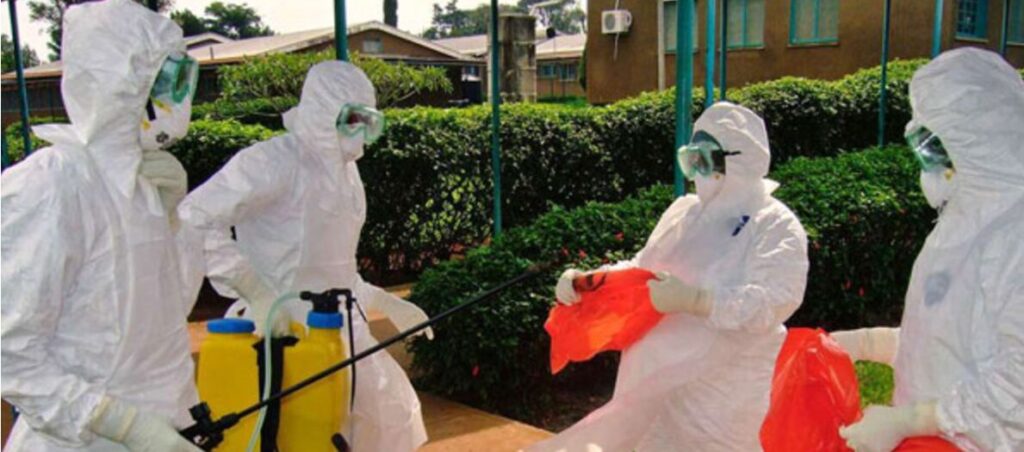
Kenya has been listed among ten African countries at high risk of a regional Ebola outbreak as health authorities intensify surveillance efforts following the spread of the Bundibugyo strain in the Democratic Republic of Congo (DRC) and Uganda. The warning was issued by the Africa Centres for Disease Control and Prevention (Africa CDC), which cited increased cross-border movement and regional connectivity as major risk factors driving the classification.
Africa CDC Director-General Dr Jean Kaseya said Kenya’s position as a major transport and trade hub places it directly within the pathway of potential regional transmission. He noted that the country shares busy land borders with Uganda and maintains strong commercial and air links with the DRC, increasing vulnerability despite the absence of confirmed local infections. Other countries identified as high risk include Angola, Burundi, Central African Republic, Republic of the Congo, Ethiopia, Rwanda, South Sudan, Tanzania, and Zambia.
Although Kenya has not recorded any Ebola cases linked to the current outbreak, the Ministry of Health confirmed that nine suspected individuals have already been tested and cleared of the virus. Rapid response teams have been placed on standby across the country, while screening measures have been intensified at all major points of entry. Authorities say more than 48,000 travelers have so far undergone screening procedures at border crossings and airports, including Jomo Kenyatta International Airport, Malaba, and Busia border points.
The warning comes at a time when Kenya’s health preparedness capacity continues to face significant challenges. The country currently has only three biosafety level four laboratories capable of handling and confirming Ebola samples, while isolation infrastructure at county level remains uneven. Health experts have also raised concern over the lack of approved vaccines or treatments for the Bundibugyo strain currently circulating in the region.
The outbreak in the DRC has escalated rapidly since it was first declared. World Health Organisation Director-General Dr Tedros Adhanom Ghebreyesus revealed that surveillance efforts have identified more than 900 suspected cases, including 101 confirmed infections. The epicentre remains Ituri Province in eastern DRC, a densely populated region affected by armed conflict and displacement, complicating response efforts.
Uganda has also recorded a worsening situation, with three new confirmed cases pushing the country’s total infections to five. According to Dr Tedros, the latest cases involve a Ugandan health worker, a driver, and a Congolese national who crossed from Ituri Province seeking medical treatment. Ugandan authorities have since traced and isolated more than 120 contacts linked to infected individuals in efforts to contain further spread.
Health agencies say the absence of licensed medical countermeasures for the Bundibugyo strain presents one of the biggest challenges to regional preparedness. Unlike other Ebola strains that can be managed using approved vaccines and therapies, the current outbreak requires reliance on public health interventions such as early detection, isolation, supportive clinical care, infection prevention and control, safe burial practices, and intensive contact tracing.
The Ministry of Health in Kenya has urged the public to remain vigilant and adhere to preventive measures, including regular handwashing with soap and running water or the use of alcohol-based hand sanitisers. Citizens have also been cautioned against contact with bodily fluids of symptomatic individuals and against participating in unsafe burial practices that involve direct handling of the deceased.
Authorities further warned against handling or consuming bushmeat, especially bats, monkeys, and apes, which are known reservoirs of the Ebola virus. Travelers entering the country are required to comply with mandatory screening procedures and provide accurate travel history information to health officials.
The Ministry stressed that early detection remains critical in preventing isolated infections from escalating into a national health emergency. Kenyans experiencing symptoms such as sudden high fever, severe body aches, vomiting, or unexplained bleeding have been advised to seek immediate medical attention at designated isolation facilities instead of attempting home treatment.
Meanwhile, international agencies are scaling up financial and technical support for the regional response. The World Health Organisation and Africa CDC have jointly appealed for $314 million to strengthen surveillance, diagnostics, and emergency response systems across high-risk countries. The United Nations has allocated up to $60 million for emergency interventions in the DRC and neighbouring states, while the Bill and Melinda Gates Foundation has committed an initial $15 million to support frontline response activities and community-based interventions.
Global health agencies have emphasized that coordinated regional action will be essential to preventing wider cross-border spread. WHO and Africa CDC have already established a continental incident management support team to coordinate emergency operations, as governments across East and Central Africa move to strengthen preparedness against the growing outbreak threat.

Stateupdate Media Group |SMG
Contributor at State Update.
Related News

Will Gachagua Vie 2027? Constitutional Crisis, High Stakes, and the Quest for Justice at Milimani Courts

How Sex Is Holding You Back: George IQ Watson on Politics, Strategy, and Leadership

Rigathi Gachagua’s Discovery About a UDA Scheme in Ol Kalou Sparks Change in Travel Plans

Kenyans React As Uhuru Asks Gen Zs To Keep Criticizing Ruto’s Government

The 2026 Savings Renaissance: Top 10 High-Yield Money Market Accounts to Beat USA Inflation Now
Outrage Erupts Over Alleged Abductions Linked to AI-Generated Content Critical of President Ruto
Latest News
Martha Karua Set to Grace Nakuru as PLP Opens New Offices, Farmers Party Joins Opposition Camp
Ugandans in Kenya Warned After Ruto’s Urgent Directive
Mount Kenya Hawkers Accused of Double Standards Over Ruto’s Foreign Traders Directive: Senator Samson Cherargei Sparks Debate
CS Joho and MP Sudi Deliver Ruto’s Condolences to Tanzania’s President Samia
Kenyans In Burundi Sent A Strong Message By The Government