The Wisdom of 80 Years: Joseph Mbuthia Gichuru’s Blueprint for Wealth and Integrity

In an era dominated by digital noise, get-rich-quick schemes, and the constant pressure to conform to modern trends, the perspectives of those who have successfully navigated the complexities of life remain an invaluable compass.
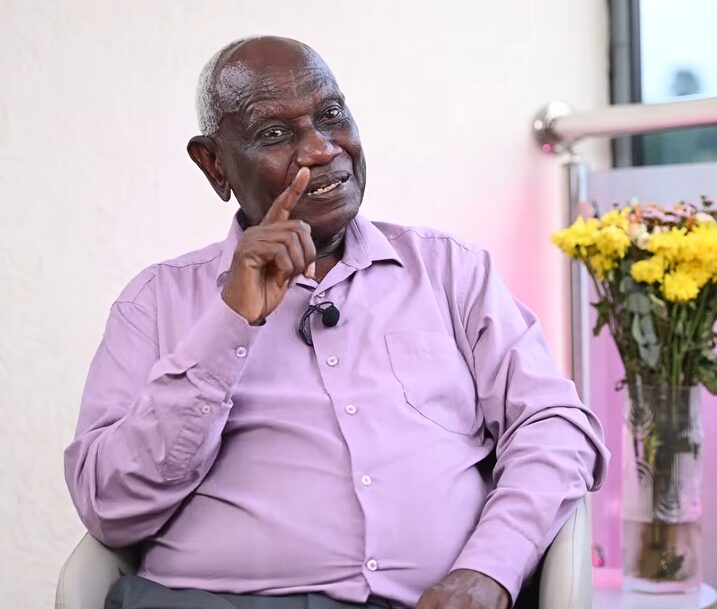
Mzee Joseph Mbuthia Gichuru, an 80-year-old titan of the Nakuru business landscape, recently sat down for a candid conversation about his journey, offering a Masterclass in resilience, financial discipline, and ethical entrepreneurship. His story is not merely one of accumulation; it is a profound testament to the power of steady, purpose-driven growth in a rapidly evolving Kenyan economy.
The Foundational Shift: From Traditional Employment to Entrepreneurial Vision
For many young Kenyans today, the path to success feels shrouded in mystery or blocked by systemic hurdles. Mzee Gichuru offers a sobering yet optimistic corrective. He recounts a time in the 1960s when employment was not a struggle but a gateway, yet he refused to be complacent. Even as a young man earning a stable salary, he recognized that true agency required more than a paycheck.
He emphasizes that the modern obsession with avoiding employment is a misunderstanding of what a job provides: the essential discipline, networking, and foundational capital needed to launch one’s own enterprise. His transition into the security and transport industries was not born of impulsivity, but of meticulous observation—seeing the gaps in the market left by colonial-era businesses and having the audacity to provide an improved, local alternative.
Redefining Opportunity in a Changing Market
One of the most powerful messages shared by Gichuru is that opportunities are rarely universal; they are deeply personal and contingent on one’s ability to see what others miss. While many critics point to the ‘good old days’ when land was cheap and resources were plentiful, Gichuru argues that the mindset required for success remains unchanged. Whether it is agricultural innovation, the digital economy, or the untapped potential of the blue economy, he maintains that the market is still ripe for those who refuse to be copycats. He urges entrepreneurs to prioritize feasibility studies over trends, arguing that flooding a saturated market with generic services is a race to the bottom, whereas authentic service to the community creates sustainable, long-term value.
Confronting the ‘Corruption Disease’ and Restoring Governance
Perhaps the most pressing portion of his insight concerns the state of the nation. Gichuru identifies corruption as the single greatest threat to Kenyan development, lamenting how it has become the default mode of operation in both public and private spheres. He is particularly critical of the ‘tenderpreneur’ culture and the normalization of kickbacks, which he notes are often imported habits that have been allowed to fester.
He calls for a return to rigorous civic education and a demand for good governance, suggesting that the path to a prosperous Kenya lies in policy-driven, transparent investment rather than political patronage. For Gichuru, the strength of the nation rests not in the hands of the corrupt, but in the silent majority of hardworking citizens who continue to build in spite of, not because of, the existing system.
The Debt Dilemma: Using Leverage Responsibly
Financial literacy is often clouded by simplistic advice, such as the mandate to be completely ‘debt-free.’ Gichuru challenges this narrative by sharing his own life experience, where strategic borrowing was the engine of his growth. He clarifies that there is a critical distinction between consumption debt and investment debt. By using loans to acquire productive assets like lorries and tractors, he was able to scale his operations and multiply his income.
He warns, however, that this requires a deep understanding of financial risk and the ability to maintain strong relationships with lenders, who act as partners in growth. His story serves as a reminder that financial freedom is not about avoiding debt entirely, but about managing it with the precision of a master builder.
Legacy, Relationships, and the Essence of a Life Well-Lived
As the conversation turns to the future, Gichuru offers a refreshing take on retirement and legacy. When asked when a businessman should retire, he provides no simple answer, because to him, business is a form of service to humanity. His life in Nakuru, residing on land he built with his own hands, reflects a life where comfort was achieved through patience and caution. He underscores that, ultimately, life requires very little to be lived well—food, shelter, clothing, and a clear conscience. The rest is merely decoration. His parting advice is a reminder to nurture professional relationships, as they are the true safety net in times of crisis. Through his eyes, we see that longevity is not just about staying alive for eighty years, but about leaving behind a blueprint of integrity that others can follow to build a better future for themselves and their community.

Stateupdate Media Group |SMG
Contributor at State Update.
Related News

Details On Sameta High School: KCSE, Fees, and Comprehensive Admission Guidelines

Why Baltasar Engonga Was Sentenced to Jail

Babu Owino Reveals Shocking Details On Attack by Robert Alai

How to Apply for TSC Jobs in Kenya: A Step-by-Step Guide (2025)

List of ODM Gusii Leaders Who Skipped 20 Years Celebration Emerges
Top Mt. Kenya Parties Form Alliance, Endorse Fred Matiang’i for 2027 Presidency
Latest News

Martha Karua Set to Grace Nakuru as PLP Opens New Offices, Farmers Party Joins Opposition Camp

Ugandans in Kenya Warned After Ruto’s Urgent Directive

Mount Kenya Hawkers Accused of Double Standards Over Ruto’s Foreign Traders Directive: Senator Samson Cherargei Sparks Debate

CS Joho and MP Sudi Deliver Ruto’s Condolences to Tanzania’s President Samia

Kenyans In Burundi Sent A Strong Message By The Government