Morara Kebaso’s Money Syllabus: The Secrets Behind a Thriving Furniture Business in Kenya

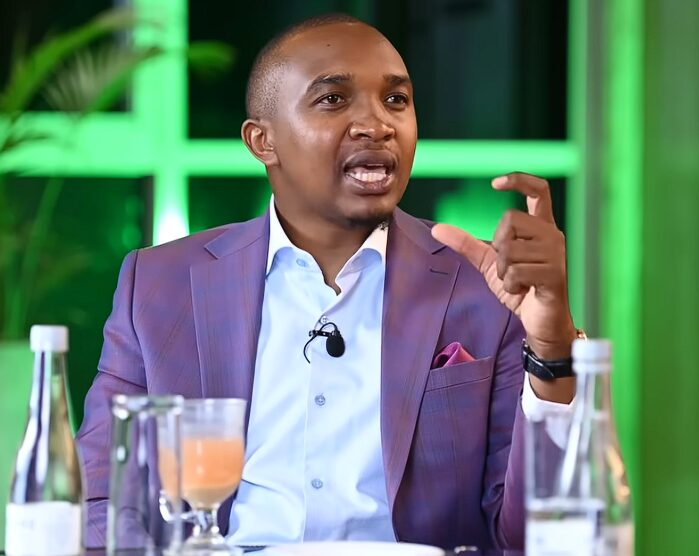
In the modern economic landscape, where many young people feel sidelined by systemic barriers, Morara Kebaso—a prominent Kenyan youth leader and entrepreneur—has emerged as a beacon of unconventional wisdom. His journey, marked by rapid ascent from a humble waiter to a successful, self-made entrepreneur, offers a masterclass in financial literacy and grit. For those seeking to navigate the often opaque world of business, Morara’s “money syllabus” is not just about accumulating currency; it is about building a scalable, sustainable, and ethical engine for long-term growth.
The Staircase Philosophy: Growing Into Money
One of the most persistent myths in wealth creation is the notion of the overnight success. Morara Kebaso vehemently dismantles this, proposing instead the “staircase” model. Wealth, he argues, is a process of growth—a systematic development of character, skill, and insight that matures over time. You do not wake up with a fortune; you grow into the level of responsibility and complexity required to manage it.
“Money is something you grow into,” Morara explains, emphasizing that life is designed as a series of levels. By viewing his career through this lens, he moved from the survival mode of a waiter to the nuanced world of high-end furniture manufacturing. He suggests that young people should avoid the trap of comparing their “chapter one” to someone else’s “chapter twenty.” By focusing on the incremental steps of problem-solving, one can build a foundation that is resilient enough to hold the weight of large-scale capital.
Leveraging the Trifecta: Time, Energy, and Skill
When capital is scarce, entrepreneurs often feel paralyzed by the lack of initial investment. Morara’s advice is simple: leverage what you have. In the absence of money, you possess two of the most potent assets available to any human being: time and energy. By applying these to a specific, high-demand skill, one can bridge the gap between poverty and opportunity.
Morara recounts his early days of trying to break into the furniture industry without a workshop or capital. Instead of retreating, he identified a gap in the market—the lack of effective marketing for high-end furniture showrooms. He volunteered his time and digital skills to secure clients that the owners could not reach, taking a commission for every sale. This strategy allowed him to generate the capital necessary to fund his own business without taking on predatory, high-interest debt. “When you lack money, you must leverage your time and your energy,” he notes. By positioning himself as an option in the marketplace, he eventually attracted the very opportunities he was once chasing.
The Power of Systems: From Hustler to Business Owner
Many entrepreneurs remain trapped in the “hustler” phase because they fail to distinguish between being a self-employed individual and owning a business. The turning point for Morara came when he realized that he could not be the only system in the building. Whether managing inventory or tracking staff performance, a manual, human-dependent system is a recipe for failure—and, as Morara learned through personal experience, theft.
He stresses the necessity of integrating ERP (Enterprise Resource Planning) systems into even the smallest ventures. By automating procurement, sales, and employee management, an entrepreneur gains the freedom to step away from the daily grind without the business collapsing. “The power to be wealthy is if money can be made in your sleep; if you have to be there for the money to be made, you are not yet wealthy,” he observes. This shift from manual reliance to systemic automation is the invisible wall that separates successful enterprises from failed startups.
Redefining Good Money vs. Bad Money
In a society often obsessed with fast cash, Morara draws a firm line between different types of revenue. To him, “good money” is not merely money earned through legal channels; it is “hard money.” It is money earned through the resolution of a genuine problem or the provision of a real service. Conversely, “bad money” is any form of “easy money,” regardless of whether it is technically legal. He argues that money earned without the friction of effort or the value of service is rarely kept because the owner lacks the discipline to manage it.
He posits that wealth is a byproduct of problem-solving. By identifying a gap—whether physical, environmental, or social—and providing a solution that people are willing to pay for, you move away from the desperation of the chase. “Money is a shy girl,” he says, noting that if you chase it, it runs away. Instead, one must become a magnet, creating value that naturally draws capital toward the business.
Financial Discipline: The Bank as a Partner
Morara’s approach to banking is grounded in the reality of building credit. He emphasizes that relying solely on informal mobile money transactions is a mistake for those looking to expand. A bank statement is a resume for an entrepreneur. By formalizing his transactions, he was able to build a history of trust with financial institutions, which eventually allowed him to leverage debt for strategic expansion rather than mere survival.
He cautions against the dangers of high-interest debt, sharing lessons from his own mistakes with predatory lenders. The key, he argues, is to never borrow to start a business you do not yet understand. Debt is a tool for expansion, not a substitute for the experience of learning the market’s nuances. Once you understand the ins and outs of your industry, debt can act as a catalyst, but until then, it is a liability that can sink an otherwise promising venture.
Ethics and Legacy in Leadership
Beyond the spreadsheets and the balance sheets, Morara maintains that integrity is the ultimate currency. In his view, a leader’s influence is tied to their ability to stand by their principles, even when it is costly. Whether discussing the role of politicians or the ethics of business, he maintains that true power lies in the belief systems of the people. If society chooses to value service and competence, the corrupt systems will eventually lose their leverage.
His vision for the future involves creating platforms where young people can share ideas, find funding, and connect with mentors who have actually walked the path. He believes that by changing the collective narrative of the youth—moving from a victimhood mindset to one of active opportunity-seeking—Kenya can unlock its latent economic potential. “Let’s change the narrative,” he concludes, advocating for a generation that seeks to create, build, and sustain.
Conclusion: The Path Forward
Morara Kebaso’s money syllabus is a testament to the fact that while the environment may be challenging, the tools for success remain within reach. By embracing the staircase of growth, leveraging time and energy, building robust systems, and maintaining an unwavering commitment to value-driven work, he has shown that one can indeed reach the pinnacle of success from nothing. For the aspiring entrepreneur, his journey is a reminder that the goal is not just to make money, but to grow into the person capable of sustaining it.

Stateupdate Media Group |SMG
Contributor at State Update.
Related News

Rigena High School KCSE 2024 Results: Performance Analysis and Grade Distribution

Arama Declares Matiang’i Opposition Flagbearer, Sends Stern Warning to Osoro and Nyakundi

Safaricom Lowers Lipa na M-PESA Buy Goods Charges from August 7, 2026: Merchants to Enjoy Free Payments Up to KSh 500

Butere Girls’ High School KCSE 2024 Results: Performance Analysis and Grade Distribution

What Will Happen To Shabana FC Revealed As FKF Investigation Intensify

Duale In Hot Soup As UKambani Governor Attacks Him Viciously
Latest News

Martha Karua Set to Grace Nakuru as PLP Opens New Offices, Farmers Party Joins Opposition Camp

Ugandans in Kenya Warned After Ruto’s Urgent Directive
Mount Kenya Hawkers Accused of Double Standards Over Ruto’s Foreign Traders Directive: Senator Samson Cherargei Sparks Debate

CS Joho and MP Sudi Deliver Ruto’s Condolences to Tanzania’s President Samia

Kenyans In Burundi Sent A Strong Message By The Government