Fearless Ichungwah & Junet Storm UK Amidst Gachagua Trip

By Stateupdate Media Group |SMGFriday, May 22, 2026 · 1:47 AM
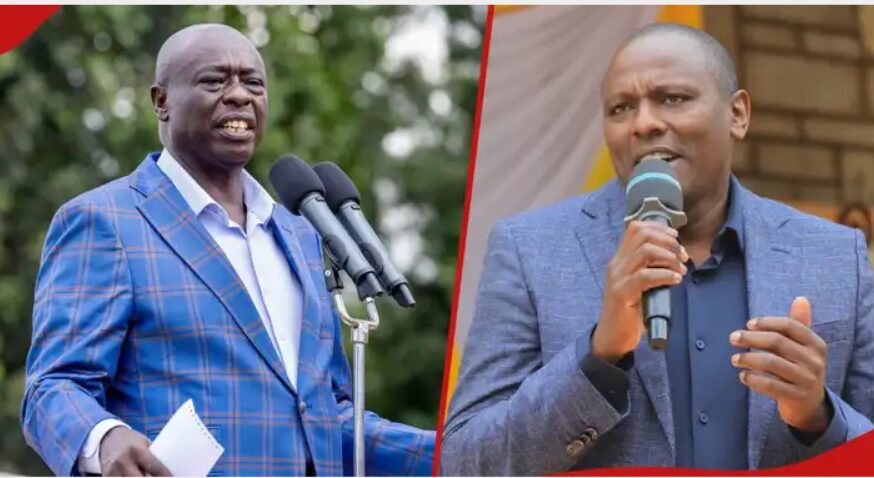
As Kenya’s political theatre unfolds on multiple stages, National Assembly Majority Leader Kimani Ichung’wah and Minority Leader Junet Mohamed have boldly taken the diplomatic offensive in the United Kingdom.
The duo, leading a parliamentary delegation, held high-level engagements at the UK House of Commons while paying a courtesy visit to the Kenyan High Commission in London. This move underscores the ruling coalition’s determination to strengthen bilateral ties even as former Deputy President Rigathi Gachagua continues his own high-profile trip to the same country.
Ichung’wah, a key ally of President William Ruto, has projected an image of steadfast leadership. Photos from the visit show him signing the visitors’ book at the Kenyan High Commission, with Kenyan and British flags prominently displayed alongside a portrait of President Ruto.
The delegation engaged UK parliamentarians on matters of trade, security, and parliamentary cooperation. Sources close to the team describe the trip as “strategic diplomacy” aimed at unlocking investment opportunities and reinforcing Kenya’s international partnerships at a time of domestic economic pressure.
Junet Mohamed, the fiery ODM Minority Leader, joined the delegation, adding a layer of cross-aisle representation. Despite their occasional sharp exchanges in the National Assembly, the two leaders appeared united in London, projecting a rare moment of parliamentary solidarity on foreign soil.
Their presence at Westminster signals Kenya’s active engagement with one of its most important Western partners.This official visit occurs squarely in the shadow of Rigathi Gachagua’s parallel UK tour.
The former Deputy President, who leads the Democracy for Citizens Party (DCP), arrived in Britain recently for what was initially billed as a month-long diaspora mobilization and fundraising drive ahead of 2027. Facing mounting criticism over rising fuel prices and the cost of living back home, Gachagua dramatically shortened his trip to about five to six days.
He cited pressure from Kenyans and his civic duty to remain engaged domestically.Gachagua’s UK activities have focused on engaging the Kenyan diaspora, launching party chapters, and delivering sharp critiques of the Ruto administration.
In interviews and public addresses, he has warned of economic turmoil and positioned himself as a voice for ordinary citizens struggling with inflation. His shortened itinerary has fueled speculation about whether the trip was more about optics than substance.
Political analysts see the overlapping UK visits as symbolic of Kenya’s deeply polarized landscape. While Ichung’wah and Junet represent institutional government-to-government engagement, Gachagua’s tour embodies opposition grassroots mobilization in the diaspora.
Critics of the government have used social media to contrast the “official delegation’s junket” with Gachagua’s “people-driven mission,” while ruling coalition supporters hail Ichung’wah’s trip as mature statesmanship amid political noise.
The timing highlights ongoing tensions since Gachagua’s impeachment in late 2024. Ichung’wah, once seen in the same political orbit as Gachagua during the 2022 campaign, has become one of his fiercest critics.
Their parallel presence in London, whether coincidental or choreographed, keeps the rivalry in the international spotlight.
As both teams wrap up their UK engagements, the focus returns to Nairobi. Economic hardships, including fuel price hikes, continue to dominate public discourse. Ichung’wah’s camp insists diplomatic wins abroad will eventually translate into tangible benefits for Kenyans. Gachagua’s supporters argue that true leadership means staying connected to the people’s pain rather than jet-setting on official business.
In Kenya’s fluid politics, these UK trips illustrate a battle for narrative control. Ichung’wah and Junet have “stormed” London with the weight of state institutions behind them. Gachagua, undeterred, continues pressing his case among the diaspora. The real verdict, as always, will come from Kenyan voters in 2027.

ABOUT THE WRITER
Stateupdate Media Group |SMG
Contributor at State Update.
Related News

Tension High As 3 Ebola New Cases Are Confirmed By The Ministry of Health

Clearing the Air: Odhiambo Sets Record Straight on Gladys Wanga Rift Rumors

Govt Sends A Message To County Workers On Delayed Salaries
Ebola Virus: Aden Duale Gives An Update To Kenyans

KIMC Announces Job Opportunities for Jobless Kenyans: How To Apply

IEBC Jobs Update: Click To Check
Latest News
Martha Karua Set to Grace Nakuru as PLP Opens New Offices, Farmers Party Joins Opposition Camp
Ugandans in Kenya Warned After Ruto’s Urgent Directive
Mount Kenya Hawkers Accused of Double Standards Over Ruto’s Foreign Traders Directive: Senator Samson Cherargei Sparks Debate
CS Joho and MP Sudi Deliver Ruto’s Condolences to Tanzania’s President Samia
Kenyans In Burundi Sent A Strong Message By The Government