Why Lecturer Left UK to Kajiado: Inside Kenya’s 100% Solar-Powered Ubuntu Creative Village


A compelling and transformative counter-cultural movement is sweeping across the African continent, quietly disrupting centuries of deeply ingrained colonial mindsets and challenging the relentless pursuit of urban-centric corporate validation.
As major metropolitan areas grapple with the heavy burdens of hyper-congestion, economic instability, and cultural alienation, a visionary generation of thinkers, innovators, and entrepreneurs is making a conscious, radical choice to look away from the glittering, overcrowded cities. This historic turning point is not a simple retreat from modern society, but a courageous, deliberate reclamation of ancestral wisdom, economic autonomy, and mental well-being.
At the absolute vanguard of this paradigm shift is Elijah Gtoi Ohena, an accomplished academic, procurement expert, and passionately proud Pan-African creative whose extraordinary life journey forms the foundation of a modern ecosystem. In a deeply moving, expansive interview, Elijah laid bare his soul to share his transformative journey of leaving a comfortable life in the United Kingdom to return to his homeland, ultimately establishing a blueprint for sustainable development.
The physical and spiritual centerpiece of Elijah’s transformative vision is the remarkable genesis and evolution of the Ubuntu Eco-Lodge, alternatively celebrated as the Ubuntu Creative Village. Located roughly 25 kilometers from the bustling center of Nairobi in the rugged, sun-bleached landscapes of Kajiado, the property was originally a completely arid, dusty, and utterly barren stretch of wild bush.
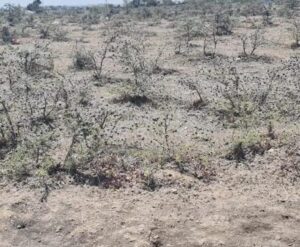
When Elijah first surveyed the land, it possessed no trees, no buildings, and lacked even the simple, natural presence of birds, standing as a stark testament to the environmental degradation that plagues many rural African ecosystems. Undeterred by the harsh, unwelcoming terrain, Elijah began a painstaking, highly intentional process of organic transformation in the year 2017. Over nearly a decade of relentless dedication, he has personally overseen the planting of thousands of diverse trees, carefully selecting and nurturing each sapling one by one.
This deliberate ecological restoration has fundamentally healed the local microclimate, creating a flourishing sanctuary that has successfully brought over 27 to 30 unique species of birds back to the area, filling a once-silent landscape with life.
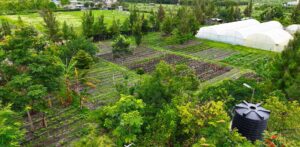
The physical infrastructure of this sanctuary is equally awe-inspiring, boasting a magnificent 12-bedroom rustic farmhouse villa designed with expansive windows to invite natural air and light. The village further integrates a meticulously curated library stocked exclusively with African authors, a vibrant art gallery, cozy communal fireplaces, an outdoor farm-to-table kitchen, and a pristine swimming pool, creating a holistic refuge for the human body, mind, and soul.
Woven deeply into the fabric of Elijah’s agricultural success is a radical rethinking of generational wealth transmission and the critical importance of utilizing prime youth energy. Long before Elijah departed for his higher education in the United Kingdom, his father made the unconventional, highly criticized decision to purchase the desolate Kajiado property, facing immense skepticism from family members who could not comprehend the value of buying an isolated piece of the bush.
Breaking away from rigid societal traditions, his father chose to gift this substantial parcel of land to Elijah while he was still a young man, a deliberate act of early inheritance that fundamentally altered the trajectory of Elijah’s life. This profound parental gesture inspired Elijah’s current, fierce advocacy urging modern African parents to completely redefine how they pass wealth to the next generation.

Elijah argues with absolute conviction that the traditional practice of withholding land and assets until a parent passes away is a tragic waste of human potential, as waiting until a parent is 70 and the child is 50 ensures that the inheritance lands in hands that have already run out of physical vitality and innovative ideas. By empowering youth with land during their prime energetic years, families can catalyze immediate, groundbreaking socio-economic transformations, turning static inheritance into active, generational progress.
This deep devotion to the soil is inextricably linked to Elijah’s overarching philosophy of Pan-Africanism, cultural pride, and the revolutionary concept of “going backward” to go forward. He levels a sharp, unapologetic critique against modern, Westernized educational curriculum structures that have historically and systematically demonized agriculture, painting farming as a degrading, retrogressive occupation reserved solely for the uneducated and impoverished.
This structural brainwashing has tragically forced millions of brilliant young Africans to continuously swap true cultural value for superficial economic prices, wearing heavy suits in sweltering cities while chasing paper certificates and corporate desk jobs that detach them from their heritage. Elijah firmly believes that the true path to liberation and economic dominance for Africa requires a bold, intellectual journey backward to the basics—meticulously learning from ancestral land management systems, embracing organic farming methods, and honoring sustainable indigenous architecture.
To visually reinforce this message of historical pride, the lodge proudly displays magnificent, hand-painted portraits of iconic, revolutionary leaders like Wangari Maathai, Thomas Sankara, and Nelson Mandela, serving as a constant daily reminder of who Africans are and the unbroken spirit they possess.
Reflecting deeply on his years spent living and working in Europe, Elijah offers a profound cross-cultural summary, stating that while the West has built magnificent, highly advanced infrastructure to support life, it tragically lacks actual life itself, whereas the African continent is overflowing with raw life, vibrant culture, and deep communal connection.
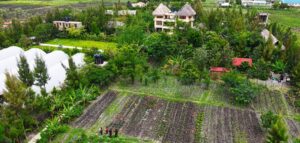
The practical execution of this worldview manifests beautifully in the eco-sustainability and highly innovative, off-grid business model that powers the entire Ubuntu Creative Village. Operating with a deep respect for the environment, the state-of-the-art processing facility and hospitality center run entirely off the national power grid, aggressively aiming to hit 100% total solar energy dependency.
This massive green energy framework is seamlessly backed up by a sophisticated network of rain-harvested water dams, a dedicated backup borehole system, and a closed-loop biodigester system that purifies and recycles all wastewater directly back into the farm to keep the landscapes lush and productive. In a world obsessed with rapid scaling and short-term capital accumulation, Elijah completely rejects the toxic allure of aggressive commercialism, warning that the modern generation is dangerously infatuated with balance sheets and price tags at the expense of human dignity and ecological health.
By prioritizing intrinsic cultural value and the sacred philosophy of Ubuntu—the belief that “I am because we are”—over raw, exploitative commercialization, he provides a living demonstration that true, sustainable financial reward naturally and effortlessly follows a value-driven enterprise. Far from being a completed project, the current lodge functions merely as a brilliant prototype; Elijah’s long-term master plan involves acquiring 300 acres of land to construct a massive, fully integrated “Ubuntu Village” designed to actively engage the global African diaspora in building hands-on, nature-centric community ecosystems.

Elijah’s practical agricultural triumphs give him a unique, authoritative platform to voice sharp, deeply insightful socio-political views on the current state of governance and economic policy in modern Kenya. He points out the staggering, highly volatile reality that while youth constitute over 70% of the national population, less than 10% of these young individuals possess a meaningful, stable income, creating a systemic crisis of unemployment that threatens the very stability of the nation.
With fierce, intellectual candor, Elijah argues that multi-billion-shilling mega-infrastructure projects, such as the Standard Gauge Railway (SGR) and highly publicized affordable housing schemes, are profoundly misplaced priorities that frequently serve as lucrative avenues for large-scale political corruption and the enrichment of elite cartels.
He asserts that the struggling youth of the nation are not begging for superficial state favors or pre-built concrete blocks in urban centers; rather, they are demanding systems that actually work, level playing fields, robust rule of law, and a complete end to the systemic looting that has crippled the country since independence. Elijah passionately advocates for a massive, state-supported wave of urban-to-rural migration, urgently imploring young people stuck in the squalid, dangerous, and degrading conditions of urban slums to boldly return to their rural ancestral lands.

By leveraging modern technology to work remotely, establishing localized value chains like cold-pressing sunflower oil, and directly engaging with the soil, the youth can bypass corrupt urban systems to cultivate true wealth, independence, and lasting dignity for themselves and their communities.
Ultimately, Elijah Gtoi Ohena’s revolutionary journey stands as a brilliant, unassailable beacon of hope and an inspiring socio-economic blueprint for twenty-first-century Africans across the globe. His story challenges the dominant, highly destructive narrative of the global brain drain, proving that the ultimate luxury of the modern era is not found in the cold, alienating high-rises of foreign Western capitals or the chaotic, polluted streets of metropolitan hubs, but in the absolute freedom to command one’s time, cultivate the earth, and build an enduring legacy.
By fusing high-level academic expertise and modern environmental technology with a deep, uncompromising love for African heritage, the Ubuntu Creative Village demonstrates that local ecosystems can be fully restored and made highly profitable without losing their cultural soul. This masterclass in slow, intentional, and conscious living reminds a rising generation that Africa’s vast, unexploited wealth does not reside in the empty promises of foreign aid or extractive external investments, but directly beneath their feet, waiting to be unlocked by those courageous enough to reclaim their identity through the soil.

Job Maangi| Reporter
Contributor at State Update.
Related News

From Cleaner to CEO: My Manager Betrayed Me, Here’s What It Taught Me About Business

How to Open an Account at Equity Bank Kenya (Step-by-Step Guide)

Don’t Set Foot in Meru: Gachagua Declares War on Ruto Over Alleged Plot to Oust CJ Martha Koome

KEPSHA Chair Johnson Nzioka Dies in Mombasa Road Crash After Car Hits Trailer

France vs Morocco: World Cup Quarter-Final Showdown Promises Fireworks as European Giants Face Africa’s Fearless Lions

POLITICAL BOMBSHELL: Kisii Senator Declares Edwin Sifuna Kenya’s Next President as 2027 Race Ignites
Latest News

Martha Karua Set to Grace Nakuru as PLP Opens New Offices, Farmers Party Joins Opposition Camp

Ugandans in Kenya Warned After Ruto’s Urgent Directive

Mount Kenya Hawkers Accused of Double Standards Over Ruto’s Foreign Traders Directive: Senator Samson Cherargei Sparks Debate

CS Joho and MP Sudi Deliver Ruto’s Condolences to Tanzania’s President Samia

Kenyans In Burundi Sent A Strong Message By The Government