Lawyer to Farmer: The Maasai Woman Rewriting the Rules of Agribusiness

In a world increasingly driven by the frantic pace of rapid urbanization and the relentless pursuit of corporate milestones, an quiet yet profound counter-cultural movement is beginning to take root across the African continent. This shift is not merely about opting out of the daily grind, but rather about a conscious, deliberate reclamation of time, identity, and economic autonomy.
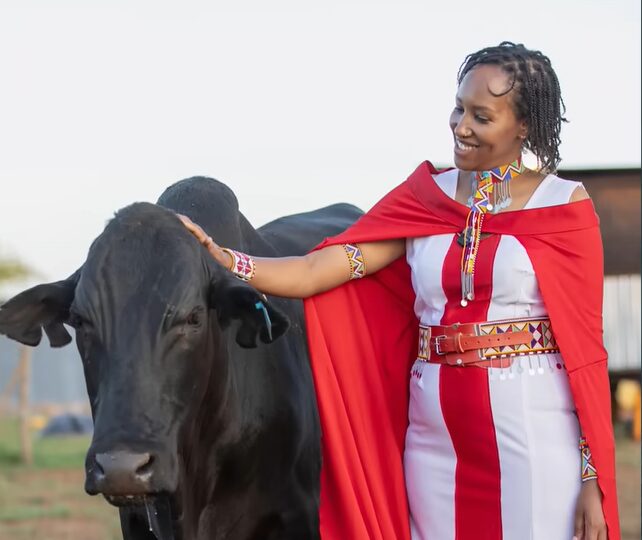
At the forefront of this modern paradigm shift is Randisa, affectionately known as Ran, a lawyer-turned-entrepreneur whose life trajectory challenges virtually every conventional metric of success. In an exclusive interview, Ran shared her transformative journey of leaving a high-flying career in Nairobi to establish a sustainable livestock enterprise in rural Kenya.
Her story is a masterclass in intentionality, showing how modern expertise can be seamlessly woven with traditional wisdom to create a life of purpose. It is a narrative summarized perfectly by the compelling reality of her daily life: “She Left the City For The Village & Now Runs a Ranch While Homeschooling Her Child.” This powerful transition represents a growing desire among African millennials to redefine what it means to live well, moving away from the crowded concrete jungles of major cities and toward a lifestyle rooted in sustainability, community, and personal freedom.
The decision to step away from a structured legal career was not met with immediate understanding from those around her. As the very first girl from her village to attend university and study law, Ran carried the heavy weight of communal and familial expectations on her shoulders.
Her academic and professional achievements were viewed by her community as a hard-won ticket out of rural poverty and into the upper echelons of urban corporate success. When she made the radical choice to leave a prestigious humanitarian agency to pursue rural farming, the initial reaction from locals was one of profound confusion and concern.
Many in her village automatically assumed she had lost her job, unable to comprehend why anyone would voluntarily trade a pristine, air-conditioned corporate office for the dust and physical labor of a livestock farm. Even her own father openly questioned her decision, viewing the move as a step backward from the modern progress she had achieved through her education.
However, Ran viewed her transition not as an abandonment of her training, but as a redirection of her analytical skills toward solving tangible, grassroots challenges. Over time, as her vision materialized into a thriving, highly sophisticated enterprise, her father deeply embraced her success, recognizing that his daughter had not abandoned her potential, but had instead used it to pioneer a completely new path for her family and community.
Central to Ran’s journey is the profound disruption of deep-seated cultural norms regarding gender and property ownership within the agricultural sector. Coming from the Maasai community, she grew up within a patriarchal framework where women played a vital, daily role in caring for livestock, yet were completely excluded from the ultimate ownership and financial decision-making power associated with the animals.
Women performed the labor of milking and nurturing the herds, but it was the men who controlled the sales, pocketed the profits, and held the societal status of being cattle owners. By establishing Real O Ranch, Ran has fundamentally shifted this narrative, proving that livestock ownership and management do not have a gender.
Her ranch stands as a living testament to structural change, demonstrating to young girls in her community that a woman can be the visionary, the owner, and the chief executive officer of a large-scale agricultural business. This reclamation of ownership goes beyond simple financial independence; it is a vital redefinition of cultural identity that empowers women to take up space in sectors that have historically shut them out, showing that traditional livelihoods can be modernized and made equitable without losing their cultural soul.
Beyond her revolution in the livestock industry, Ran and her city-born husband have completely reinvented their approach to education, opting to shield their eleven-year-old daughter from the rigid, institutionalized structures of conventional schooling.
Recognizing the intense overstimulation and digital dependency that often plagues children growing up in fast-paced urban environments, they turned to a custom-tailored, eclectic homeschooling framework. Rather than forcing their child into a one-size-fits-all curriculum, they utilize the international IGCSE Cambridge examining body solely for official benchmarks, ensuring she remains globally competitive.
To build strong analytical skills, they implement Singapore Maths, a highly regarded methodology that emphasizes conceptual understanding over rote memorization. Most importantly, they have actively decolonized their daughter’s education by replacing standard Western history modules, such as Eastern European history, with deep-dives into Kenyan history, geography, and socio-economic systems.
This deliberate curricular shift ensures that their daughter grows up with a profound understanding of her own context, learning about the heroes, landscapes, and challenges of her homeland before studying the history of foreign nations.
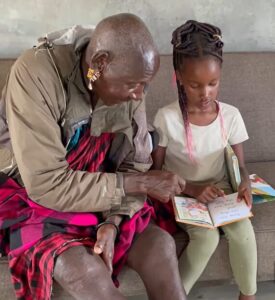
This educational philosophy extends beautifully into the reclamation of African identity and linguistic heritage, bypassing the historical language barriers that often alienate urbanized African children from their roots. A major pillar of their homeschooling journey involves direct mentorship from the older generation, with the young girl taking regular Maasai language and history lessons straight from her grandfather.
In many elite urban families, children grow up speaking only English or Swahili, creating a tragic generational disconnect where they cannot communicate deeply with their rural elders. By centering her daughter’s education around her grandfather’s wisdom, Ran is ensuring that vital cultural history, oral traditions, and ancestral values are preserved and carried forward into the future.
This intergenerational bridge transforms education from a clinical exercise in passing exams into a sacred process of identity formation, grounding the young girl in a secure sense of who she is and where she comes from, which is the ultimate foundation for navigating an increasingly globalized world.
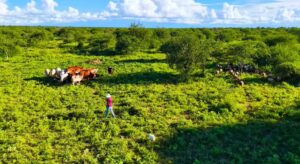
At Real O Ranch, the physical environment serves as a vibrant, living classroom where abstract academic subjects are transformed into practical life applications. For Ran’s daughter, mathematics is not just numbers on a worksheet; it is calculated in real-time by counting newborn livestock, tracking growth rates, and measuring feed ratios. Reproductive science and biology are learned firsthand by helping farm animals give birth, providing a deep, experiential understanding of life cycles that no textbook could ever replicate.
Economic realities and financial literacy are taught through a highly structured allowance system, where the eleven-year-old earns money by completing specific, responsible tasks, such as washing the farm dogs. This system teaches her the direct correlation between labor, value creation, and financial management from an early age.
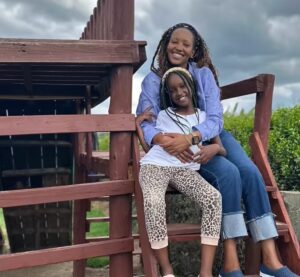 By integrating education with the daily rhythms of the farm, Ran is cultivating a holistic worldview in her child, producing an independent thinker who understands that knowledge is meant to be applied to real-world scenarios rather than merely memorized for a test paper.
On the business side, Ran has approached agriculture not as a casual retirement hobby, but as a sophisticated, corporate enterprise built around the revolutionary concept of a closed-loop, 360-degree value chain. Frustrated by the rampant lack of quality control, hygiene issues, and predatory middlemen that characterize public logistics and traditional open-air livestock markets, she took the bold step of building an on-site, modular slaughterhouse. This state-of-the-art infrastructure allows Real O Ranch to completely control every single variable of the production process, creating a true “Farm to Fork” model. From the initial breeding choices and meticulous grass-feeding practices to humanely harvesting the animals, cold-room conditioning, precision vacuum packing, and direct-to-consumer delivery, every step is fully traceable. This absolute control over the supply chain guarantees premium quality, eliminates unnecessary intermediaries, and ensures that the consumer receives unadulterated, ethically raised meat, proving that local African agribusinesses can achieve international standards of excellence.
Operating a ranch in Kajiado, a region frequently battered by the devastating effects of climate change and prolonged dry spells, requires an advanced approach to drought mitigation and pasture management. Ran fiercely advises modern farmers to completely flip the traditional agricultural mindset by working backward: securing reliable pasture and extensive water storage solutions long before purchasing a single animal.
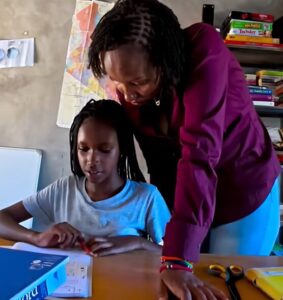
 To insulate her business from unpredictable weather patterns, Real O Ranch actively stockpiles high-quality forage and plants its own specialized hay across an ever-expanding acreage. This strategic reserve ensures that her livestock remains well-nourished and healthy throughout the harshest dry seasons, maintaining the consistent, premium quality of her meat products when other farmers are facing catastrophic losses. By prioritizing ecological preparedness over rapid herd expansion, Ran has built a resilient agricultural model that respects the carrying capacity of the land while safeguarding her business from environmental shocks.
Financial literacy and corporate discipline are the pillars that sustain this entire agricultural operation. Ran strongly emphasizes the absolute necessity of treating farming with the same rigorous budgeting and accounting standards applied to tech startups or multinational corporations. On her ranch, expenses are tracked down to the single unit, including calculating the exact salt consumption per goat, ensuring that every input is optimized for profitability. Furthermore, she passionately advocates for farmers to place themselves on a fixed, formal payroll rather than treating the farm’s revenue as a personal piggy bank.
This financial separation prevents entrepreneurial burnout, protects personal livelihoods, and allows for an accurate, transparent measurement of the business’s true net profitability. By demystifying the financial realities of farming, Ran provides a sustainable blueprint that challenges the chaotic, informal management styles that have historically hindered the growth of smallholder agriculture across the continent.
In perfect alignment with her commitment to sustainability, the entire processing center and ranch infrastructure run completely off-grid, utilizing cutting-edge green technology. Real O Ranch leverages Kenya’s abundant sunshine through an extensive solar energy grid that powers everything from the heavy-duty cold-room refrigeration units to the residential spaces. Water security is guaranteed through a dedicated borehole system with sophisticated solar-powered piping that distributes clean water efficiently across the vast property.
By eliminating dependency on unreliable national utility grids, Ran has not only significantly reduced her operational overhead costs, but has also minimized the ranch’s carbon footprint. This seamless integration of green infrastructure proves that commercial, industrial-scale agricultural processing can be achieved in remote, rural areas without destroying the surrounding ecosystem, offering a brilliant model for sustainable rural industrialization.
For Ran, the concept of “Slow Living” is frequently misunderstood; it is not an invitation to idleness, laziness, or a complete withdrawal from productive society. Instead, she defines slow living as the radical act of commanding your own time and choosing exactly how you expend your life force, rather than letting the chaotic dynamics of a hyper-congested city dictate your schedule.
In Nairobi, as in many global mega-cities, professionals routinely lose hours of their lives every single day stuck in grueling, soul-crushing traffic gridlocks, arriving at work already exhausted and returning home too drained to engage with their families.
By relocating to the village, Ran reclaimed ownership of her time, allowing her to design a daily routine where intense, highly productive entrepreneurial work coexists harmoniously with slow family dinners, mindful parenting, and deep personal reflection. It is a lifestyle choice that values time as the ultimate currency of wealth, prioritizing mental well-being and presence over the superficial prestige of urban corporate titles.
This transition back to the village has also brought about a profound emotional and social healing through the revival of the spirit of Ubuntu—the African philosophy that underscores human interconnectedness. Ran beautifully highlights the stark, isolating contrast between living in modern Nairobi apartment complexes, where next-door neighbors can remain complete strangers for years, and the deeply communal trust of rural village life.
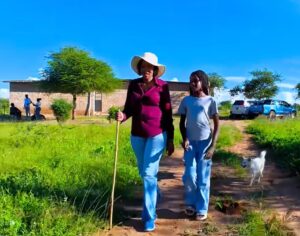
In the village, community is a lived reality; neighbors regularly check in on one another, trade high-quality heirloom seeds, and share fresh morning milk without a single shred of suspicion or transactional expectation. If someone is facing a challenge, the community naturally rallies to offer support, creating an informal yet incredibly robust social safety net.
This profound sense of belonging and mutual care provides a psychological security that cannot be bought in a city, reminding modern Africans that true wealth is often found in the strength and depth of our relationships with those around us.
Ultimately, Randisa’s inspiring narrative serves as a powerful, transformative blueprint for African millennials and the diaspora at large. It boldly champions the revolutionary idea that formal higher education and corporate experience should not simply be used as a vehicle to escape rural communities, but should instead be brought back to solve local, grassroots crises such as food insecurity, youth unemployment, and climate-induced drought.
For decades, the dominant narrative has encouraged an intellectual brain drain from villages to cities, leaving rural areas devoid of the innovative capital needed to develop. By returning to her roots with a law degree and corporate acumen, Ran has demonstrated how modern knowledge can revitalize rural economies, create dignified employment, and build sustainable food systems. Her journey proves that the ultimate luxury of the twenty-first century is not found in high-rise luxury apartments or corporate boardrooms, but in the freedom to design a conscious, self-sustaining life that honors identity, nurtures family, and uplifts the community.

Job Maangi| Reporter
Contributor at State Update.
Related News

Teachers Cry Foul: New Government Levies Slash Salaries to the Bone

Rigathi Gachagua Dismisses Raila Odinga’s Dialogue Call, Labels Him a Political Hypocrite

NABO CAPITAL Money Market Fund vs. Fixed Income: How to Use Goal-Based Investing to Build Wealth at NABO Capital (2026 Guide)

PSG VS Arsenal Prediction and Match Analysis

How Kenyans Will be Affected by USA vs Iran War As Conflict Escalates

ODM and UDA Lay Groundwork for 2027 Coalition Through 10-Point MoU
Latest News
Martha Karua Set to Grace Nakuru as PLP Opens New Offices, Farmers Party Joins Opposition Camp

Ugandans in Kenya Warned After Ruto’s Urgent Directive

Mount Kenya Hawkers Accused of Double Standards Over Ruto’s Foreign Traders Directive: Senator Samson Cherargei Sparks Debate
CS Joho and MP Sudi Deliver Ruto’s Condolences to Tanzania’s President Samia

Kenyans In Burundi Sent A Strong Message By The Government