Genz’s Emerge With Ruto’s Tatoos Despite Rachel Wandeto’s Brutal Murder

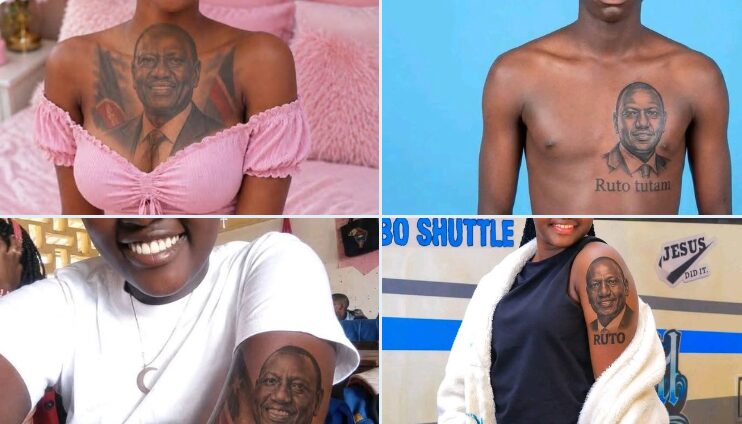
The brutal murder of gospel artist Rachel Wandeto has triggered widespread criticism of an emerging and controversial trend among some young Kenyans: getting large, photorealistic tattoos of President William Ruto on their bodies.
Her death has highlighted the potential dangers of extreme political displays in an increasingly polarized nation. Wandeto, also known as Rachel Muthoni Wandeto, succumbed to severe burns at Kenyatta National Hospital after being attacked by three unknown men while on her way home in Mwiki, Kasarani.
The assailants accosted her along 11th Street near Obama Road, assaulted her, doused her with a flammable liquid, and set her ablaze before fleeing the scene. She suffered approximately 70-75% body burns.
The Directorate of Criminal Investigations (DCI) Homicide Unit has taken over the probe. In a firm statement, the DCI condemned the heinous act as a serious violation of human life.
Detectives have vowed to thoroughly investigate the full circumstances of the murder, identify everyone involved in its planning and execution, and ensure they face justice.
Wandeto had gained public attention for her prominent tattoos featuring President Ruto’s face on her chest, shoulder, and other areas, along with slogans such as “PRESIDENT RUTO” and “Ruto Tutam” (Two Terms). These tattoos visibly demonstrated her strong support for the President and his administration. Preliminary reports indicate that the attackers targeted her specifically because of her vocal loyalty and the visible tattoos.
Her tragic death has drawn swift condemnation from leaders across the political divide. President William Ruto and Interior Cabinet Secretary Kipchumba Murkomen, among others, have called for urgent justice and an end to political violence.
The incident has also amplified ongoing discussions on social media. A widely shared X post by @DanChepta featured images of similar large tattoos on young people’s chests, arms, and shoulders. The post criticized the growing trend and pointed out the irony of such extreme loyalty displays amid Kenya’s current political tensions, economic challenges, and past incidents of unrest.
Many users questioned whether some of the viral tattoo images were authentic or AI-generated due to their high quality. Others dismissed the trend as a result of peer pressure, youthful exuberance, or poor judgment. In resurfaced interviews, Wandeto had openly shared that her unwavering support, including the tattoos, had strained personal relationships, including the end of her marriage.
Yet she remained steadfast in her decision, expressing deep admiration for the President. Wandeto’s killing serves as a sobering reminder of the risks associated with extreme political fandom in a charged environment.
While political support is a fundamental right, many Kenyans are now urging greater tolerance and caution, emphasizing that differences in opinion should never escalate into violence.
As the DCI investigation proceeds, the nation awaits answers and accountability. Justice for Rachel Wandeto has become a rallying call against political intolerance and senseless brutality.Political expression must remain protected, but never at the expense of human life.

Stateupdate Media Group |SMG
Contributor at State Update.
Related News
Tragedy Deepens for Slain Blogger Albert Ojwang’s Family as Donation Scam Unfolds

Kenyans Shocked As Bungoma Man Buried In Glass Coffin He Designed For Himself

Guardian Angel Multi-Million Farming Venture & Truth Behind His Marriage

Kenyans React To Ruto’s Arsenal Congratulations Message

Museveni Takes Early Lead in Uganda’s 2026 Elections
“The Wheelbarrow is Broken” William Ruto’s Ex CS Outbursts, Reveals Secret About Ruto
Latest News

Martha Karua Set to Grace Nakuru as PLP Opens New Offices, Farmers Party Joins Opposition Camp

Ugandans in Kenya Warned After Ruto’s Urgent Directive

Mount Kenya Hawkers Accused of Double Standards Over Ruto’s Foreign Traders Directive: Senator Samson Cherargei Sparks Debate
CS Joho and MP Sudi Deliver Ruto’s Condolences to Tanzania’s President Samia
Kenyans In Burundi Sent A Strong Message By The Government