After Divorce, He Left Nairobi to Rebuild His Life in1.2M Off-Grid ‘Mabati’ Cottage in Kajiado


In the heart of the vast, sun-drenched savannahs of Kajiado, Kenya, a radical architectural and lifestyle revolution is quietly unfolding, challenging the conventional Kenyan dream of urban success and concrete mansions. As Nairobi grapples with skyrocketing living costs, relentless traffic congestion, and the suffocating mental toll of corporate overstimulation, an increasing number of city dwellers are questioning the true price of metropolitan life.
Among those leading this silent migration toward intentional living is Thomas Omolo, a prominent leadership and executive coach who chose to completely dismantle his structured urban existence to pioneer an off-grid sanctuary in the wilderness.
His journey is not merely a story of relocation, but a profound masterclass in emotional resilience, radical downsizing, and sustainable architectural innovation. By constructing a stunning, minimalist cottage primarily made of corrugated iron sheets, locally known as mabati, Omolo has proved that luxury, comfort, and peace of mind do not require millions of shillings or a connection to the national grid.
His transformation offers a blueprint for thousands of Kenyans yearning for a life anchored in mental clarity, community integration, and environmental harmony, serving as a powerful reminder that sometimes, moving forward requires a willing return to zero.
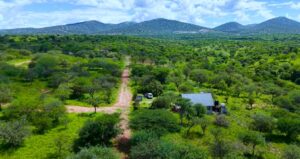
The catalyst for this extraordinary transition was born out of deep personal adversity, highlighting a narrative of emotional healing that resonates with anyone who has ever faced a major life crisis.
Following a painful estrangement and subsequent divorce, Omolo found himself standing at a crossroads, utterly exhausted by the relentless demands and superficial expectations of Nairobi life. The emotional toll of his broken relationship was compounded by the sensory overload of the city, forcing him to confront a structural shift that could no longer be ignored.
In his professional capacity as an executive coach, Omolo frequently helps corporate leaders navigate complex institutional transitions, yet he found himself needing to apply those exact same principles of radical accountability to his own broken heart.
Reflecting on that pivotal chapter, Omolo shares that grief is not just about physical death; it is separation, it is loss, and it is the quiet shattering of the future you had envisioned for yourself. Instead of masking his pain with the distractions of urban entertainment or burying himself in corporate ambition, he made the counterintuitive decision to strip away every layer of his material comfort to fund an entirely new path.
To finance this ambitious vision of a wilderness sanctuary, Omolo engaged in an extreme process of downsizing that shocked many of his peers in Nairobi’s professional circles. He sold his vehicle, walked away from his upscale neighborhood, and moved into a tiny, cramped bedsitter apartment in the bustling, low-income area of Kangemi to conserve every single coin.
Piece by piece, he auctioned off his cherished household items, including his television, his cooker, and his premium furniture, intentionally trading his material possessions for the literal bricks and mortar of his future. This deliberate stripping down of his life was not a sign of defeat, but a strategic liquidation of his old identity to birth something entirely authentic.
Navigating grief through the physical act of building became his ultimate therapy, transforming his sorrow into tangible, creative energy. Omolo explains that when everything around you collapses, the physical act of creation becomes a vessel for putting your internal pieces back together, allowing your hands to build the peace that your mind is desperately searching for.
By pouring his energy into the soil of Kajiado, he discovered that architectural creation could serve as a powerful mechanism for processing profound emotional trauma and reclaiming personal sovereignty.
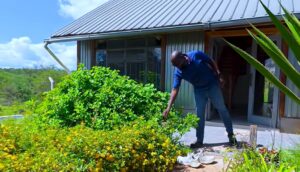
This physical transition laid the foundation for a deeply philosophical adoption of slow living, a lifestyle centered on a conscious reclamation of personal identity and an intimate reconnection with the natural world. In the chaotic rhythms of Nairobi, individuals are constantly running, using the noise of the city to drown out the internal voices and unresolved conflicts that require attention.
Moving to the absolute silence of the Kajiado wilderness stripped away those convenient distractions, forcing Omolo to sit quietly with his thoughts in an environment characterized by clarity over chaos. The routine of his days shifted from alarm clocks and traffic jams to intentional, mindful activities that grounded his body and soul.
He describes a typical morning as waking up without a frantic rush, opening his eyes to the gentle symphony of chirping birds or the therapeutic rhythm of rain beating against the roof. Omolo routinely practices grounding by walking barefoot across the red earth, spending his evenings watching the crimson African sunset dissolve into a dark velvet sky, and sitting by a crackling fire pit to observe the brilliant patterns of the Milky Way galaxy.
This intentional lifestyle has not only restored his mental well-being but has also provided a sanctuary for his children, offering his daughters a peaceful, expansive space to paint, play, and ask the deep, unhurried questions that city life rarely accommodates.
Central to this philosophical shift is what Omolo refers to as his unique cup concept, a mental framework that encourages individuals to define exactly what enough looks like in their own lives. He observes that modern society trains people to constantly expand their cups, chasing endless accumulation, larger houses, and flashier cars, which ultimately leads to an insatiable thirst and a lack of genuine peace.
By intentionally shrinking his own cup, Omolo shifted his focus entirely away from material accumulation and redirected his energy toward cultivating deep human connections, internal stillness, and mental freedom. He notes that when you finally define the boundaries of your cup, you stop competing with societal benchmarks and realize that peace of mind is the ultimate luxury that money can rarely buy in the city.
An integral component of Omolo’s success in the wilderness has been his seamless and highly respectful integration into the local community, which is predominantly inhabited by the culturally rich Maasai people. For many urbanites moving into rural setups, friction with indigenous communities is a common pitfall, often driven by an attitude of urban superiority or a disregard for local customs.
Omolo faced his first true test during the initial phases of construction when local youth intercepted his transport vehicles, demanding informal transit taxes for moving construction materials through the area. Instead of reacting with anger, threatening legal action, or invoking his status as an educated Nairobi professional, Omolo chose the path of humility and dialogue.
He sought out the community’s elder chairperson, presented himself openly, and asked to be taught how their traditional systems worked so he could comply respectfully. Omolo emphasizes that you cannot enter a community that has survived for centuries with the arrogance of a city outsider; you must humble yourself, sit under the acacia tree, and allow the elders to guide your steps.
This respectful approach completely de-escalated the tension, transforming potential adversaries into fiercely loyal neighbors and guardians of his homestead. Omolo further solidified this relationship by actively participating in the local economy rather than importing his goods and services from Nairobi. When he decided to rear livestock, he purchased his animals directly from the local Maasai pastoralists and arranged to keep his goats within their larger communal herds, paying local youth to herd them.
He relies heavily on the traditional Nyumba Kumi security initiative and elder networks to resolve any minor disputes, fully immersing himself in the social fabric of Kajiado. This deep cultural integration has provided him with a level of security and communal belonging that no gated community in Nairobi could ever replicate.
Omolo observes that true security in the wilderness does not come from electric fences or armed guards, but from the relationships you build with the people who have called that land home for generations.
Architecturally, the cottage stands as a magnificent testament to minimalist, functional design, defying the widespread stigma that corrugated iron sheet housing is inherently cheap, hot, or unlivable. Built on a modest quarter-acre plot measuring one hundred by one hundred feet, the structure was intentionally designed to maximize spatial utility while minimizing its ecological footprint.
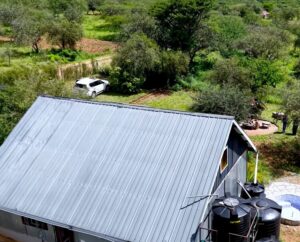
The exterior utilizes thick, durable mabati sheets that carry a fascinating history, having been repurposed from heavy-duty West African vehicle shipping crates, giving the building an industrial yet rustic charm. To counter the intense heat that characterizes the Kajiado plains, Omolo incorporated brilliant climate control engineering into the design.
He constructed exceptionally high roofs to facilitate natural air circulation and integrated continuous high vents that allow hot air to escape effortlessly. The interior walls feature a sophisticated gypsum board backing that acts as a powerful thermal buffer, working efficiently to keep the indoor spaces remarkably cool during the blistering midday heat while insulating the home to retain warmth during the chilly wilderness nights.
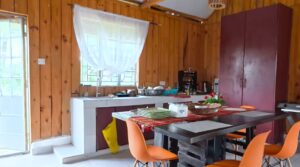
The interior design seamlessly blends industrial elements with natural warmth, featuring extensive use of light-colored Tanzanian pine wood for the flooring, ceilings, and custom furniture. To bring the breathtaking outside landscape indoors, Omolo sourced massive French windows from thrift and demolition yards in Gitaru, securing them at a staggering forty percent discount compared to retail prices. These expansive glass panels flood the home with an abundance of natural light, eliminating the need for artificial lighting during the day and framing the acacia trees like living works of art. The layout of the cottage is a masterclass in open-plan spatial utilization, functioning comfortably as a three-bedroom home despite its compact footprint.
A highlight of the architectural layout is a high, cleverly engineered loft space that serves as an entertainment zone and alternative sleeping quarters, capable of hosting up to ten guests comfortably without making the home feel cluttered.
To maintain a clean, allergen-free indoor environment, Omolo separated his cooking zones, designing a sleek, open internal kitchen for light meals alongside a traditional, detached outdoor kitchen. This brilliant configuration ensures that the smoke, high heat, and intense aromas of heavy traditional Kenyan cooking remain entirely outside the main living quarters.
Operating completely independent of public utility providers, the cottage features a robust, one hundred percent off-grid infrastructure that prioritizes absolute self-reliance. The home is powered entirely by a high-capacity solar energy system that handles lighting, refrigeration, and electronic charging needs without a single glitch.
Water security is achieved through an extensive rainwater harvesting system connected to massive storage tanks, catching every drop of precious precipitation that falls from the Kajiado skies. Most notably, instead of installing an expensive, conventional solar water heater that might struggle during prolonged cloudy spells, Omolo designed a highly efficient, custom-engineered firewood-burning tank contraption.
This innovative system utilizes minimal firewood scraps to generate high-pressure hot water within minutes, proving that off-grid living can be both incredibly resourceful and luxurious. Remarkably, Omolo estimates that the entire financial cost to construct a functional, basic version of this beautiful, sustainable structure comes out to approximately 1.2 million Kenyan Shillings, a fraction of what a standard brick-and-mortar home costs in Nairobi’s metropolitan fringes.
The overarching lesson of Omolo’s inspiring journey is encapsulated in his powerful philosophy that life is truly lived in the transition, rather than the final destination. He strongly advises anyone who feels trapped in the messy middle of a life crisis, whether a financial collapse, a career burnout, or a painful divorce, to stop forcing immediate, expensive fixes to satisfy societal expectations.
He advocates for embracing the downsizing process, finding peace in functional, simple spaces, and learning to sit comfortably with discomfort until the path ahead becomes crystal clear. For those seeking inspiration, a temporary escape from the city, or professional coaching mentorship, Omolo has opened up his sanctuary to the public.
Listed as Otin Cottage Kajiado on popular social media platforms like Instagram and TikTok, the property is regularly rented out for peaceful weekend stays, creative writing retreats, and corporate executive workshops. By proving that a life of dignity, beauty, and absolute serenity can be built from humble iron sheets and a clear vision, Thomas Omolo has redefined the modern Kenyan dream, showing that the ultimate wealth is not found in what we accumulate, but in what we have the courage to leave behind.

Stateupdate Media Group |SMG
Contributor at State Update.
Related News

“Sh10bn fraud plot exposes SHA woes” Newspaper Review: Tuesday, August 26, 2025

The Three CSs: Why Ruto Deployed His Top Ministers to Help Oburu Oginga Reshape ODM

TSC Secondary School Teachers Jobs Per County, School and Subject In May 2025: Check out

Oburu Odinga Hospitalised in Nairobi as Family Considers UK Treatment

Counting on People to Drive Waste Solutions

Salaries and Allowances for Primary School Teachers in Kenya
Latest News

Martha Karua Set to Grace Nakuru as PLP Opens New Offices, Farmers Party Joins Opposition Camp

Ugandans in Kenya Warned After Ruto’s Urgent Directive

Mount Kenya Hawkers Accused of Double Standards Over Ruto’s Foreign Traders Directive: Senator Samson Cherargei Sparks Debate

CS Joho and MP Sudi Deliver Ruto’s Condolences to Tanzania’s President Samia

Kenyans In Burundi Sent A Strong Message By The Government