How to Make KSh 450,000 Monthly Profit on a 100×100 Plot: Dairy Farming Secrets from a 24-Year-Old CEO

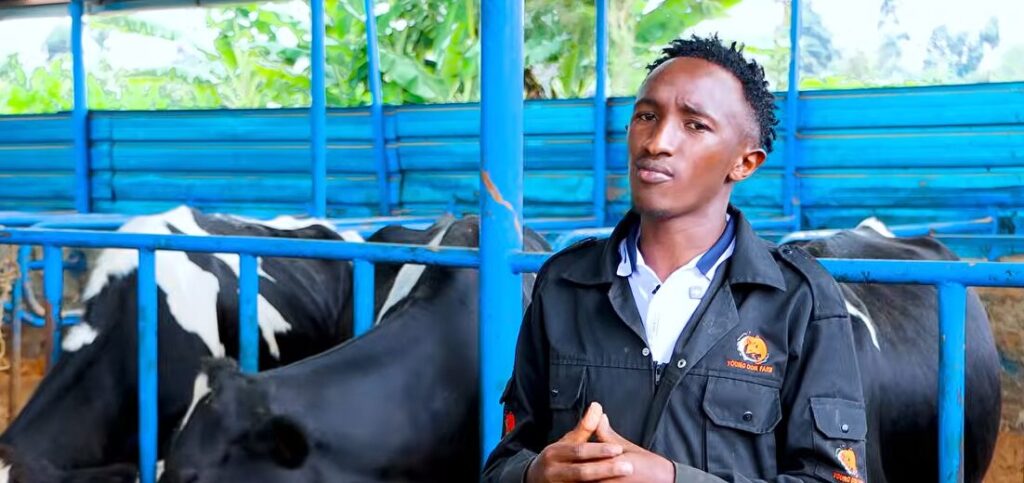
The transformation of contemporary agriculture is increasingly being driven by a highly educated, tech-savvy generation of youth who are redefining farming as a sophisticated, corporate enterprise rather than a labor-intensive fallback for the un-employed.
Across East Africa, and particularly within the high-yield agricultural belts of central Kenya, young professionals are abandoning traditional white-collar paths to unlock unprecedented wealth from the soil. A prime paradigm of this structural economic shift is found in Githunguri, Kiambu County, where twenty-four-year-old Kelvin, the Chief Executive Officer of Yangdon Farm, has established a high-density, hyper-profitable dairy empire on a meager 100-by-100-foot urban plot.
Managing a herd of forty-two premium Friesian cows, Kelvin generates a stunning gross monthly revenue of seven hundred and fifty thousand Kenyan shillings, netting a clear profit of four hundred and fifty thousand shillings after accounting for intensive feeding, veterinary care, and labor overheads.
His journey is a masterclass in modern agribusiness strategy, leveraging micro-capital accumulation, disciplined data-driven credit scaling, strict epidemiological controls, and modern social media marketing to scale a small backyard setup into a highly optimized milk-producing factory.
Kelvin’s venture into high-yield agribusiness began not out of a lifelong devotion to animal husbandry, but rather as an opportunistic response to the global disruptions of the COVID-19 pandemic in 2020. At the time, he was a student at the Cooperative University of Kenya pursuing a degree in accounting and finance, navigating online classes from his ancestral home while nursing an earlier childhood dream of becoming a lawyer.
Recognizing that the prolonged lockdowns kept families confined to their homes with a rising demand for fresh food supplies, he decided to utilize a small portion of family land to plant seventy beds of coriander during a particularly harsh dry season. Because he invested heavily in structural irrigation and manual watering, his crop thrived precisely when the market faced a severe shortage, allowing him to command premium prices at the local market.
“The seventy beds, with each single bed giving me around two thousand shillings, came to around one hundred and forty thousand shillings, and that’s when I collected my first good money,” Kelvin recalls, detailing the precise origin of his corporate capital. At that time, high-yielding dairy cows were significantly less expensive than they are today, which enabled him to immediately pivot his crop returns into the livestock sector by purchasing two heavily pregnant Friesian heifers.
Instead of treating the initial milk returns as disposable income, Kelvin immediately applied his rigorous accounting and finance training to optimize the financial liquidity of his young business. He registered with the local dairy cooperative, which guaranteed a consistent market outlet, but instructed the financial handlers to withhold his monthly earnings entirely, converting them directly into corporate institutional shares.
For six consecutive months, he lived frugally, allowing his daily production of fifty liters to compound silently within the cooperative’s banking systems until his share capital hit three hundred thousand shillings. Under the structured credit policies of agricultural cooperatives, a member can qualify for credit multipliers of up to three times their total accumulated savings.
“I went there, I applied for a loan, and they gave me the loan times three my total number of shares, which is where I collected my first good money of nine hundred thousand shillings around September of 2020,” Kelvin explains. This injection of formal credit allowed him to construct a baseline wooden cowshed and purchase five more high-quality cows, expanding his active milking herd to ten by the close of his very first fiscal year.
The strategy of utilizing a cooperative ecosystem as both a financial shield and a primary credit facilitator became the bedrock of Yangdon Farm’s rapid capital expansion. In the agricultural landscape, commercial banks often demand massive immovable collateral and intensive formal payslips, creating structural barriers that lock out ambitious young entrepreneurs. By contrast, Kelvin realized that a dairy farmer’s milk delivery ledger functions as a powerful, ironclad credit instrument that bypasses traditional bureaucratic skepticism. “For the employed people, they are told to bring their payslip, but for me, the farmer, I will be told to bring my milk production statement for the last six months to qualify for the loan, and it’s that easy because end of the month, your milk pay will be cut to repay,” Kelvin points out, championing a fearless approach to calculated debt.
This continuous loop of using milk delivery statements to secure expansion loans enabled him to purchase a premium piece of land for three point three million shillings in early 2025, freeing his operations from the geographic and psychological limitations of his father’s homestead. He emphasizes that avoiding institutional credit out of fear only traps young farmers in stagnation, declaring that one must be a calculated risk-taker to build a truly modern enterprise.
Before achieving sustained success in the dairy industry, Kelvin faced the harsh realities of agricultural diversification when he ventured heavily into poultry farming, an experience that taught him invaluable lessons about market architecture and input costs. Attracted by the quick returns of egg production, he scaled up a poultry wing that housed four thousand layers, investing heavily in specialized poultry housing and high-efficiency brooding equipment.
However, between 2022 and 2024, the global and regional supply chains for animal feed ingredients collapsed, causing the cost of a standard layer feed formulation to nearly double from twenty-eight hundred shillings to over forty-two hundred shillings per bag. Compounding this severe margin squeeze was the fragmented, highly volatile nature of the poultry market, which lacked a unified cooperative framework to protect independent producers from predatory middlemen. “Poultry farming is a bit tricky because the cost of production of the egg is very high, and they don’t have a cooperative that defends the farmer; it is you alone with your chicken finding the market, whereas in milk production, you just milk your cows, take it to the cooperative, and you are guaranteed to be paid,” Kelvin reflects. Recognizing that the poultry wing was draining vital operational cash flow, he made the executive decision to liquidate the entire four-thousand-bird flock, reallocating the recovered capital exclusively into expanding his dairy infrastructure.
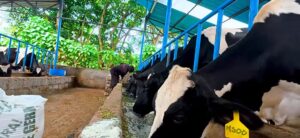
Managing forty-two large Friesian cows on a highly constrained 100-by-100-foot plot requires an incredibly disciplined approach to zero-grazing architecture and high-density spatial engineering. Kelvin intentionally designed the structure of his modern cowshed to function like an industrial assembly line, segregating the layout into distinct functional zones to maximize bovine comfort, operational hygiene, and labor efficiency.
The structure incorporates an elevated feeding trough area, a reinforced concrete standing platform where the cows gather during feeding times, and a deeply padded sleeping area designed to prevent physical injury. “The sleeping area should have sawdust because we prefer sawdust as their mattresses to keep them comfortable and safe,” Kelvin explains, highlighting that physical stress directly impairs a cow’s daily milk expression.
Because the compact footprint of the farm cannot physically support the intensive grazing requirements of forty-two cows, Kelvin utilizes a highly successful community-leasing model, renting four acres of fertile land from neighboring families to intensively cultivate high-yielding napier grass and specialized fodder crops.
This external feeding network provides the core roughage block for the herd, which is systematically processed through silage machinery and mixed with dry concentrates like maize germ, wheat bran, and premium mineral supplements to maximize milk yield.
The selection of the Holstein-Friesian breed was another deliberate, data-driven commercial choice designed to maximize gross revenue within the specific economic realities of the Kenyan dairy market. While other breeds like the Jersey, Guernsey, and Ayrshire boast significantly higher butterfat content and superior milk quality characteristics, the regional commercial pricing structure heavily prioritizes raw volumetric quantity over compositional quality.
Farmers are paid a flat rate per liter delivered, regardless of the nutritional density or creaminess of the product, which makes sheer volume the primary driver of agribusiness survival.
“The best breed to keep in your farm is the Friesian because it has more milk volume, and because for now in Kenya, the more the milk quantity you deliver, the more they pay you,” Kelvin states, noting that if the country ever shifts toward a quality-based payment system, he would immediately replace his entire herd with Jersey cows.
Currently, his top-tier milking cows average between twenty-five to thirty liters of milk per day, and he is actively working with specialized veterinary nutritionists to breach the forty-liter barrier per cow through highly refined total mixed ration formulations.
Operating a high-density livestock facility also exposes an entrepreneur to intense biological and epidemiological risks, demanding a flawless veterinary management protocol to protect the underlying capital investment.
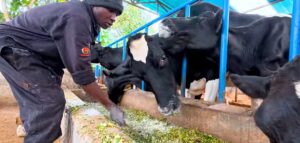
Kelvin divides bovine health challenges into three strict categories—viral, bacterial, and nutritional—and treats biosecurity and preventative medicine as non-negotiable operational mandates. Viral threats such as Lumpy Skin Disease, Foot-and-Mouth Disease, and Anthrax are entirely mitigated through a rigid annual vaccination schedule overseen by licensed veterinary officers.
Bacterial infections, most notably mastitis, present the most severe threat to daily cash flow, as the disease inflames the mammary glands and destroys a cow’s milk-producing tissues due to poor sanitation or incomplete milking techniques.
“Mastitis is very expensive to treat because one cow can use around twenty thousand shillings to treat a single infected teat, which can completely finish your farm if you are not careful with hygiene,” Kelvin warns.
Nutritional disorders, such as post-calving milk fever caused by acute calcium deficiencies, are managed through precise pre-conception and post-partum mineral supplementation, ensuring that the cows never experience metabolic crashes during the peak of their lactation cycles.
Beyond the daily mechanics of milk production, Kelvin has built a powerful corporate brand by transforming Yangdon Farm into an educational hub and a consulting agency that empowers other aspiring agriculturalists across East Africa.
He strongly discourages individuals from blindly throwing capital into livestock farming without first acquiring deep, practical knowledge of the underlying science of animal nutrition and structural management.
To address this knowledge gap, he hosts structured farm tours and intensive training classes where prospective investors must study the exact feeding weights, hygiene standards, and operational costs before they are permitted to purchase any breeding stock from his farm.
“One thing I tell people about dairy farming is don’t venture into the investment if you don’t have enough knowledge because it is highly capital intensive, and if you buy a cow at three hundred thousand shillings and it dies, that is a huge loss,” Kelvin emphasizes.
His strict rule of refusing to sell premium livestock to untrained individuals ensures that the cows maintain their high production levels when transferred to new environments. This educational and fabrication wing has expanded so rapidly that Kelvin now manages a dedicated construction team that travels internationally, recently completing advanced metallic cowshed installations for high-net-worth clients in Uganda.
A critical factor accelerating the meteoric rise of Yangdon Farm is Kelvin’s sophisticated use of modern social media platforms to demystify agriculture and market his corporate services directly to a global audience.
By maintaining a highly active and vocal presence on TikTok, Instagram, and YouTube, he documents the raw, unedited realities of daily farm life, sharing financial breakdowns, feeding tips, and veterinary challenges in real time. This transparent digital marketing strategy has attracted thousands of followers, effectively turning a traditional village farm into a recognized corporate brand that draws premium clients, international students, and high-profile media features.
“One of the things that has helped the rise and fast growth of Yangdon Farm is because of social media, and I am a very loud person on social media because I try to market my things and inspire people through those channels,” Kelvin shares. This digital footprint has allowed him to build a diversified revenue stream that includes consultation fees, cowshed construction contracts, and livestock sourcing commissions, proving that modern farmers must be master marketers as well as skilled operators.
The broader cultural impact of Kelvin’s success lies in his passionate advocacy for youth empowerment through organized, commercialized agriculture, challenging the deep-seated societal stigma that associates farming with poverty and manual failure.
He looks with deep concern at the thousands of university graduates who migrate to overpopulated urban centers every year, spending years chasing elusive, low-paying corporate jobs while sliding into severe clinical depression.
Kelvin argues that the soil offers an immediate, highly lucrative alternative for any young person willing to apply a professional, scientific mindset to crop or livestock production. “We meet on the road and nobody knows my money is from dirt and dairy animals, and nobody knows I was in the cow dung in the morning, because if an employed person comes with their paycheck today and I come with my monthly milk payment, the cash is exactly the same,” Kelvin declares with immense pride.
By showing that a twenty-four-year-old can achieve absolute financial independence and drive a premium vehicle purely from the proceeds of dairy farming, Kelvin has become a powerful symbol of economic hope, proving that the ultimate frontier for youth wealth creation lies in reclaiming and commercializing the African soil.

Job Maangi| Reporter
Contributor at State Update.
Related News

Clearing the Air: Odhiambo Sets Record Straight on Gladys Wanga Rift Rumors

BREAKING : Paul Biya, 92-year-old Re-Elected as Cameroon’s President Until 2032 — Extends His Four-Decade Rule
Napier Grass for Higher Milk Production in Kenya: Planting Disease-Free Crop

The Complete Neighborhood Lodging Guide for Philadelphia Visitors In USA

Gachagua’s ‘Mt Kenya’ Remark Takes Shocking Turn — ‘It Was Never About Tribe

SHA Unveils a New Framework Allowing Kenyans to Seek Medical Services Abroad For Conditions Unavailable Locally
Latest News
Martha Karua Set to Grace Nakuru as PLP Opens New Offices, Farmers Party Joins Opposition Camp

Ugandans in Kenya Warned After Ruto’s Urgent Directive

Mount Kenya Hawkers Accused of Double Standards Over Ruto’s Foreign Traders Directive: Senator Samson Cherargei Sparks Debate

CS Joho and MP Sudi Deliver Ruto’s Condolences to Tanzania’s President Samia

Kenyans In Burundi Sent A Strong Message By The Government