Safe Organic Biopesticides: Why Private Company Innovators and NGOs Need Government Backing

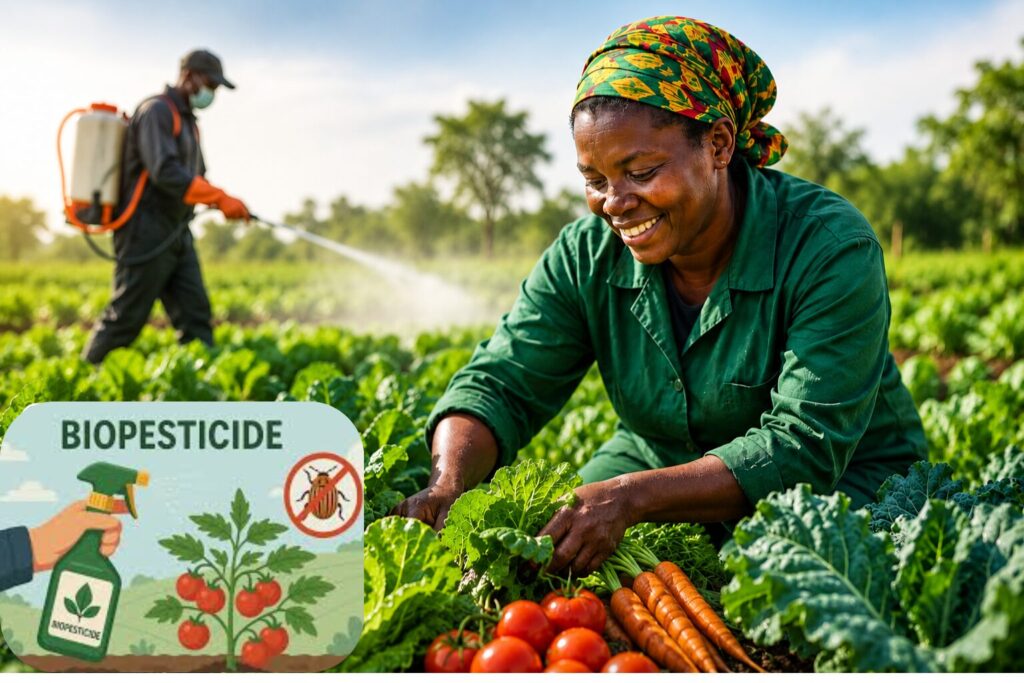
For years, conversations around agriculture in Kenya have largely focused on one disturbing reality — the widespread use of toxic pesticides and their impact on human health, soil fertility, biodiversity, and food safety. Reports by scientists, environmental groups, and public health advocates have consistently warned that dangerous chemical residues continue to find their way into food consumed daily by millions of Kenyans. Yet amid the alarm and public concern, one crucial conversation has not received enough attention: the growing number of private companies, innovators, and non-governmental organizations already manufacturing safer organic alternatives.
Across Kenya and beyond, businesses are producing biopesticides, organic fertilizers, microbial solutions, and bio-based crop protection products that can reduce dependence on harmful chemicals. However, many of these innovators operate with minimal government support despite their potential to revolutionize agriculture and protect public health.
The debate on toxic pesticides should therefore move beyond criticism and shift toward action-driven solutions. Governments must actively support private companies and NGOs manufacturing safe organic agricultural inputs through tax incentives, research funding, product publicity, farmer education, and strategic partnerships.
Experts argue that the future of farming lies in sustainable agricultural systems that prioritize human health, environmental conservation, and long-term soil productivity. Kenya, whose economy heavily depends on agriculture, cannot afford to lag behind as the rest of the world transitions toward safer food production methods.
Recent stakeholder discussions in Kenya have already highlighted the need for stronger policy support for biopesticides and organic inputs. During a national workshop on biopesticide policy held in Nairobi, stakeholders including government agencies, researchers, and private sector players emphasized the importance of creating a national framework to promote safer pest management alternatives.
According to agricultural experts, one of the biggest barriers facing organic input manufacturers is limited visibility and weak institutional support. While multinational agrochemical companies dominate exhibitions, advertising, and extension programs, smaller biopesticide manufacturers often struggle to reach farmers despite producing safer products.
The government can begin by intentionally publicizing locally manufactured organic products whenever new innovations are launched. Public awareness campaigns through agricultural shows, county extension programs, radio stations, television programs, and digital platforms would significantly increase farmer knowledge on safer alternatives.
Countries such as India have already demonstrated how state-backed promotion of organic farming can transform agriculture. Through the Paramparagat Krishi Vikas Yojana (PKVY), the Indian government introduced direct financial support for organic farming clusters, including incentives for biopesticides and organic inputs. The program provided farmers with financial assistance for organic inputs, value addition, training, and marketing support.
The Indian experience shows that when governments intentionally support organic farming ecosystems, private manufacturers flourish, farmers adopt safer practices, and markets expand rapidly. Today, India is among the leading producers of biopesticides globally, largely due to deliberate policy support and public investment.
Kenya can borrow heavily from such models.
One major area requiring urgent intervention is tax relief. Most companies manufacturing organic inputs still face high operational costs ranging from product registration fees to import taxes on specialized production equipment and laboratory materials. Industry stakeholders have repeatedly argued that these costs make organic products less competitive compared to conventional pesticides that have enjoyed decades of market dominance.
A recent policy discussion in Kenya noted that companies manufacturing organic fertilizers and biopesticides continue to face regulatory and financial barriers that slow sector growth. Some manufacturers reportedly wait several months for product approvals while also paying high certification and renewal fees.
Tax incentives and subsidies would therefore play a critical role in reducing production costs and encouraging more investors into the sector. Governments across the world have used fiscal incentives to grow green industries, and agriculture should not be an exception.
Brazil, one of the world’s agricultural powerhouses, has increasingly embraced biopesticides through government-backed regulatory support and incentives. Regulatory frameworks have been adjusted to accelerate the registration and commercialization of biological pest control products while encouraging investment in sustainable agriculture technologies.
Similarly, the European Union has heavily invested in research and innovation targeting safer agricultural solutions. Under the Horizon Europe program, the EU has funded projects focused on developing eco-friendly biopesticides to reduce chemical pesticide use and protect biodiversity.
The EU’s strategy is driven by a growing recognition that chemical pesticides pose serious health and environmental threats. European policymakers are increasingly prioritizing integrated pest management systems that combine biological solutions, farmer training, and sustainable farming approaches.
Kenya faces similar concerns.
Farmers across the country continue to report increasing resistance to conventional pesticides, declining soil fertility, rising production costs, and growing consumer concerns about food safety. Environmentalists have also warned about declining pollinator populations, contamination of water sources, and loss of beneficial insects due to excessive chemical use.
County governments have started acknowledging the dangers. In Nakuru, the county government partnered with agricultural organizations to promote environmentally friendly biocontrol products and reduce pesticide risks within food systems.
Such partnerships demonstrate the importance of collaboration between governments, NGOs, researchers, and private companies.
Agricultural stakeholders believe that governments should go further by ensuring organic input manufacturers are invited to national agricultural exhibitions, policy forums, farmer trainings, and extension activities. Too often, public agricultural spaces are dominated by large agrochemical corporations while innovative local organic companies remain sidelined.
Government-backed agricultural expos and trade fairs offer powerful marketing opportunities that can increase farmer trust and product adoption. Farmers are more likely to embrace new technologies when they see government institutions validating and supporting them.
Research support is another critical pillar.
Many organic product manufacturers rely on expensive field trials and laboratory testing before their products can be approved for market use. Smaller companies and NGOs often struggle to finance these processes despite having highly promising innovations.
Public universities, agricultural research institutions, and government laboratories should therefore collaborate with local innovators to strengthen research, testing, and commercialization of biopesticides.
Countries that have invested heavily in agricultural research continue to reap significant benefits. In Europe, governments and research institutions are jointly funding scientific innovations aimed at replacing harmful chemical pesticides with safer biological alternatives.
In South Asia, research-backed support programs helped small companies manufacturing environmentally friendly biopesticides improve product quality and expand their markets. Policy reforms, professional networks, and quality assurance systems helped these companies become competitive players within agricultural markets.
Kenya possesses immense scientific talent capable of driving similar transformation if sufficient resources are allocated toward agroecological research and innovation.
Non-governmental organizations have also played a major role in promoting safer farming practices across Africa. Organizations such as Biovision, CABI, KOAN, and others have consistently trained farmers on ecological farming methods, integrated pest management, and safe food production.
These organizations should not work in isolation.
Governments must establish stronger partnerships with NGOs already championing agroecology and organic farming. Joint campaigns, extension programs, demonstration farms, and farmer field schools would significantly accelerate awareness and adoption of safer agricultural practices.
The growing demand for organic and residue-free food globally also presents a major economic opportunity for Kenya. International markets are increasingly imposing stricter standards on pesticide residues, meaning countries that transition toward safer production systems stand to gain competitive export advantages.
Consumers themselves are becoming more conscious about what they eat. Online discussions among farmers and consumers increasingly reflect concerns about carcinogenic pesticides, food safety, and sustainable farming.
Globally, the biostimulants and biopesticides market is projected to experience rapid growth as demand for environmentally friendly farming solutions increases.
Kenya therefore risks falling behind if it continues relying heavily on toxic pesticide systems while the rest of the world transitions toward greener agriculture.
Critics sometimes argue that organic farming and biopesticides cannot feed growing populations. However, agricultural experts increasingly point out that sustainable agriculture is not about eliminating productivity but about balancing productivity with long-term ecological health and food safety.
Integrated approaches combining biological controls, farmer education, soil management, and scientific innovation can significantly reduce harmful pesticide use while maintaining productivity.
The conversation must therefore shift from whether safer agriculture is possible to how governments can accelerate the transition.
Supporting private companies and NGOs manufacturing safe organic biopesticides is not merely an environmental agenda; it is a public health investment, an economic strategy, and a food security intervention.
If governments provide tax reliefs, fund research, simplify regulations, publicize innovations, and create stronger partnerships with organic input manufacturers, farmers will gain access to safer alternatives while consumers benefit from healthier food systems.
Kenya’s agricultural future depends not only on producing more food but also on producing safe food.
The fight against toxic pesticides cannot be won through speeches and reports alone. It requires deliberate investment in the people and organizations already building practical solutions.
Those manufacturing safer organic inputs should not be treated as peripheral actors within agriculture. They should be recognized as central partners in protecting the nation’s health, environment, and future food security.

Job Maangi| Reporter
Contributor at State Update.
Related News

Residents of US Ebola Centre in Kenya Proposed Center Break Silence

Utumishi Girls: Students Narrates On What Happened During The Fire Incident

KUCCPS Announces 2025 University and College Students Transfer Window Opening

The Fate Of Oburu: Simba Arati Makes New Secret Revelation In Coded Language
Kenyans Warned On Cancer Related Dangerous Aflatoxin Cereals In The Market

Truth Emerges On Oburu’s Health Amid Concerns & Speculations
Latest News

Martha Karua Set to Grace Nakuru as PLP Opens New Offices, Farmers Party Joins Opposition Camp

Ugandans in Kenya Warned After Ruto’s Urgent Directive

Mount Kenya Hawkers Accused of Double Standards Over Ruto’s Foreign Traders Directive: Senator Samson Cherargei Sparks Debate

CS Joho and MP Sudi Deliver Ruto’s Condolences to Tanzania’s President Samia

Kenyans In Burundi Sent A Strong Message By The Government