Safe Food Is a Collective Responsibility: Why the Fight Against Toxic Pesticides Must Move From Talk to Action

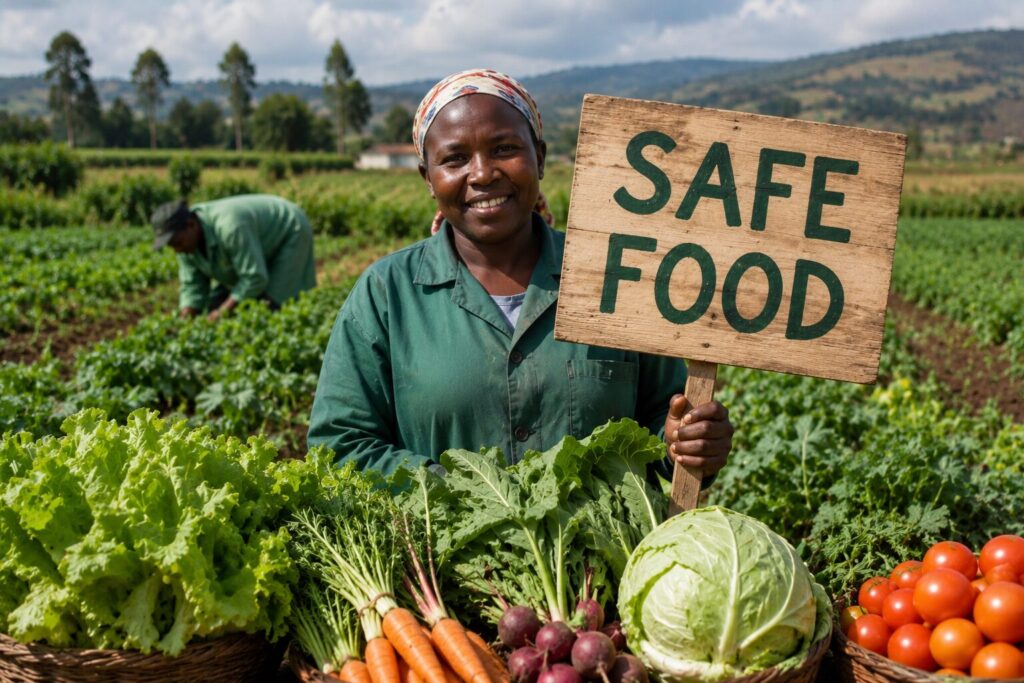
In farms across Kenya, a quiet but dangerous crisis is unfolding—one that rarely makes headlines yet affects millions every day. From the lush vegetable fields of Nakuru to the sprawling farms of Kirinyaga and Murang’a, the widespread use of toxic pesticides is raising alarm over the safety of the country’s food.
While agricultural productivity has improved over the years, experts warn that the heavy reliance on hazardous chemicals is now threatening both public health and environmental sustainability. Increasingly, the call is clear: the conversation around food safety must shift from awareness to decisive action.
Recent studies paint a worrying picture. Kenya currently uses more than 300 pesticide products, with a significant proportion classified as Highly Hazardous Pesticides (HHPs). Reports indicate that nearly 76 percent of pesticide volumes in use contain ingredients linked to serious health risks, many of which are banned in regions such as the European Union.
This raises difficult questions about regulatory gaps and the continued importation of chemicals that are deemed unsafe elsewhere. For a country that prides itself on being an agricultural powerhouse, the contradiction is stark.
The impact is already being felt on the ground. Farmers, who are at the frontline of food production, are among the most exposed. Without adequate protective gear or training, many handle these chemicals daily, often unaware of the long-term risks. “We use what is available in the agrovet shops because pests are destroying our crops,” says Peter Mwangi, a smallholder farmer in Nakuru County. “But sometimes after spraying, you feel dizzy or develop skin irritation. We don’t always know how dangerous it is.” His experience reflects a broader reality across rural Kenya, where survival often takes precedence over safety.
Beyond the farms, the risks extend directly to consumers. Scientific analyses have detected pesticide residues in commonly consumed foods such as tomatoes, kale, and potatoes.
In some cases, residue levels exceed internationally accepted safety limits, exposing millions to potential long-term health effects. These include cancer, hormonal disruption, neurological disorders, and reproductive complications. According to global health estimates, pesticide poisoning contributes to hundreds of thousands of deaths annually, with developing countries bearing the greatest burden due to weak regulatory systems and limited awareness.
Environmental experts warn that the consequences go even deeper. Toxic pesticides contaminate soil, pollute water sources, and destroy biodiversity. Pollinators such as bees, which are critical for food production, are particularly vulnerable. “When you degrade the environment, you undermine the very foundation of agriculture,” notes an environmental scientist. “Safe food cannot exist in an unsafe ecosystem. The two are inseparable.” The long-term implication is a vicious cycle where degraded soils require even more chemical inputs, further compounding the problem.
One of the most troubling aspects of the crisis is the double standard in food safety. Produce grown for export markets must meet strict international standards, particularly those set by the European Union. This often results in lower pesticide residues and stricter compliance.
However, food destined for local markets does not always undergo the same level of scrutiny. As a result, Kenyan consumers may unknowingly be exposed to higher levels of harmful chemicals than their counterparts abroad. “It is unacceptable that safer food is prioritized for export while local consumers face greater risks,” says a food policy analyst based in Nairobi. “Food safety should be a right, not a privilege.”
Yet, Kenya is not alone in facing this challenge—and solutions are within reach. Several countries have demonstrated that safer food systems are achievable with the right policies and commitment. Denmark, for instance, has significantly reduced pesticide use through a combination of taxation, strict regulation, and strong support for organic farming.
France has embraced agroecology and invested heavily in sustainable agricultural practices, while Rwanda has made notable strides closer to home by promoting integrated pest management and restricting hazardous chemicals. These examples demonstrate that change is possible when governments, farmers, and consumers align around a common goal.
Civil society organizations have also played a pivotal role in pushing for reform in Kenya. Advocacy groups have been instrumental in exposing the scale of toxic pesticide use and pushing for policy changes. Some organizations have conducted in-depth research and awareness campaigns, shedding light on the hidden dangers in the food system.
NGO’s that have supported sustainable agriculture initiatives, training farmers on organic practices and promoting safer alternatives to chemical inputs. Their work highlights the importance of grassroots action in driving national change.
The private sector is also beginning to respond, albeit slowly. Some agribusinesses are investing in biopesticides and organic inputs, recognizing the growing demand for safer food. In Kenya’s horticulture and flower industries, a number of companies have adopted integrated pest management techniques, reducing reliance on harmful chemicals while maintaining productivity.
These shifts are not only beneficial for health and the environment but also enhance competitiveness in international markets where food safety standards are increasingly stringent.
Central to the push for safer food is the growing adoption of organic inputs. Compost, biofertilizers, and botanical pesticides offer viable alternatives to synthetic chemicals, helping to reduce pesticide residues in food while improving soil health.
Experts argue that scaling up these solutions could significantly transform Kenya’s agricultural landscape. “Organic inputs are not just an alternative—they are a necessity if we are to protect both human health and the environment,” says an agricultural extension officer working with smallholder farmers in Rift Valley. “The challenge is ensuring farmers have access to these solutions and understand how to use them effectively.”
Despite the progress, significant challenges remain. Many farmers still lack access to affordable organic inputs or the training needed to transition away from chemical-intensive farming. There are also concerns about short-term yield reductions, which can discourage adoption. At the policy level, enforcement of existing regulations remains inconsistent, allowing hazardous pesticides to remain in circulation. Without stronger oversight and investment, the transition to safer food systems will remain slow.
Ultimately, the fight against toxic pesticides is not the responsibility of one group alone. It requires a collective effort involving government action, farmer education, corporate responsibility, and consumer awareness.
Policymakers must enforce stricter regulations and align local standards with international benchmarks. Farmers need training and support to adopt safer practices. Companies must prioritize sustainability over short-term profits. And consumers must demand transparency and safer food choices.
As Kenya continues to grapple with this complex issue, one thing is certain: the cost of inaction is too high. Safe food is fundamental to public health, economic stability, and environmental sustainability. The time for dialogue has passed—what is needed now is bold, coordinated action.
“Everyone has a role to play,” emphasizes a public health advocate in Nairobi. “From the farmer in the field to the policymaker in government, from the trader in the market to the consumer at home—safe food is a shared responsibility. And if we fail to act now, the consequences will be felt for generations.”
The path forward is clear, even if the journey is challenging. By learning from global examples, strengthening local initiatives, and embracing sustainable practices, Kenya has the opportunity to build a food system that is not only productive but also safe. The fight against toxic pesticides must go beyond talk—because at stake is not just the quality of our food, but the health of a nation.

Job Maangi| Reporter
Contributor at State Update.
Related News

KCSE 2024 Results: The Best and Worst Perfomed Subjects

Eburru Forest’s Revival: Climate Change, Sustainability, and the Race to Save Kenya’s Rift Valley Water Tower

Bad News as Amason Kingi Reveals the Region That Will Suffer Most if Ruto Loses His Re-election Bid

Good News To Teachers As TSC Makes A New Move

Opposition Secures Three MCA Seats in Nyamira County By-Elections

The Only Powerful Politician Who Could Save Nyaribo From Impeachment
Latest News

Martha Karua Set to Grace Nakuru as PLP Opens New Offices, Farmers Party Joins Opposition Camp

Ugandans in Kenya Warned After Ruto’s Urgent Directive

Mount Kenya Hawkers Accused of Double Standards Over Ruto’s Foreign Traders Directive: Senator Samson Cherargei Sparks Debate

CS Joho and MP Sudi Deliver Ruto’s Condolences to Tanzania’s President Samia

Kenyans In Burundi Sent A Strong Message By The Government