The Real Secret Behind Iran’s Leadership Take Over: U.S. and Israeli Strategy, Global Risks, and the Future of the Regime

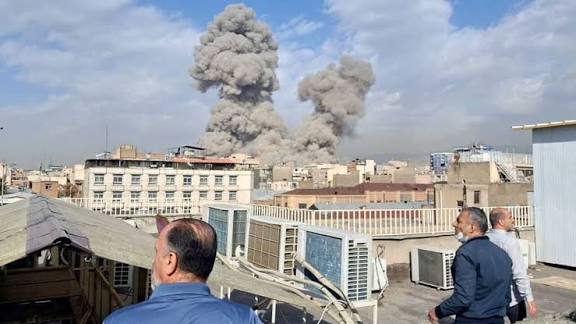
The recent waves of strikes by the United States and Israel against Iran have marked a dramatic escalation in the conflict, with both nations claiming air superiority over parts of Iran.
Their forces have not only targeted military infrastructure but also struck at the very heart of Iran’s leadership, killing senior figures including the army chief of staff, the defense minister, and the head of the Revolutionary Guards. This raises critical questions about the strategy behind these attacks and what they mean for the future of the war.
The Strategy: Confusion and Paralysis
The campaign began not with bombs but with cyber operations. Hackers from U.S. Cyber Command and Israeli intelligence blinded Iran’s communications systems, preventing officials from understanding or responding to unfolding events. This digital disruption created the conditions for precision strikes on senior leaders who had been tracked for months by the CIA and Mossad through technical surveillance and human intelligence.
The explicit aim, according to military officials, was to “daze and confuse” Iran’s leadership. By eliminating key figures and disrupting command and control structures, the U.S. and Israel sought to paralyze Iran’s ability to coordinate a coherent response.
Leadership Losses and Succession Challenges
The deaths of senior figures, including the Revolutionary Guards’ leadership, have left Iran scrambling to fill critical positions. Ahmad Vahidi has been appointed as the new head of the Guards, but the sudden loss of multiple leaders has created uncertainty. Iran had prepared for such scenarios by designating successors, but secrecy around those identities has complicated the transition.
The fact that so many senior officials were meeting together when the strikes occurred suggests either a lapse in security or a miscalculation of the threat. This has amplified the shock of the attacks and deepened the confusion within Iran’s leadership ranks.
Short-Term Military Impact
In the immediate term, Iran’s ability to mount a coordinated response has been weakened. It is unclear whether the volleys of missiles and drones being launched across the Middle East are part of a pre-planned strategy or the actions of local commanders operating independently. The disruption of central command structures means Iran risks losing control over its military operations, which could lead to fragmented or inconsistent responses.
Long-Term Political Consequences
The elimination of senior leaders raises the question of whether Iran’s calculation about continuing the war will change. A CIA assessment before the conflict suggested that removing the supreme leader could empower hardliners within the Revolutionary Guards. Any new leader will face the dilemma of whether regime survival is best ensured by continuing to fight or by negotiating with the U.S. and Israel.
However, if leadership figures continue to be killed, Iran may struggle to make any coherent decision. The possibility of regime change looms, though history shows that air power alone rarely achieves such outcomes. Without ground forces, the U.S. and Israel may be relying on internal unrest to topple the regime.
Risks of Regime Change and Popular Uprising
The strikes may embolden opposition movements within Iran. Earlier protests were crushed in January, but the weakening of security and intelligence forces could create new opportunities for dissent. President Trump has openly called for an uprising, even promising immunity for members of the security forces who lay down their weapons.
Yet the regime remains deeply entrenched, with strong networks of control. While the removal of leaders may destabilize the government, it could also trigger harsher crackdowns as remaining officials fight to maintain power.
Global Implications
The strikes have far-reaching consequences beyond Iran. In the Middle East, instability could spread as Iran’s proxies in Lebanon, Syria, Iraq, and Yemen act independently or escalate attacks. Global energy markets are already reacting, with oil prices surging amid fears of disruption in the Strait of Hormuz.
For Africa, Europe, and the wider world, higher fuel costs will strain economies and households. Inflationary pressures will rise, and governments may be forced to intervene with subsidies or price controls. The conflict underscores the vulnerability of global supply chains to Middle East instability.
The strategy behind the U.S. and Israeli strikes on Iran’s leadership is clear: create confusion, paralyze command structures, and weaken the regime’s ability to respond. In the short term, this has succeeded, leaving Iran struggling to coordinate its military and political response. In the long term, however, the consequences are uncertain. The possibility of regime change exists, but history suggests air power alone is insufficient.
For now, the priority for the U.S. and Israel appears to be inflicting maximum damage on Iran’s leadership and security apparatus. Whether this leads to negotiations, continued war, or internal upheaval remains to be seen. What is certain is that the risks—and the costs—will be borne not only by Iran but by the wider world, as energy markets and global stability are shaken by the conflict.

Stateupdate Media Group |SMG
Contributor at State Update.
Related News

WHO Arrives in Kisii to Investigate Mysterious Disease Outbreak

Good News To Teachers As TSC Makes A New Move
Ministry to Shut Down Kisii Schools After Alarming Safety Findings

Photos: Matiang’i and Gachagua attend Kalonzo’s Son Wedding in a Colorful Ceremony

University issues a Warning to First Years Students Joining Campus

TSC to Stop Promotions Based on Performance, School Administrators Sought
Latest News

Martha Karua Set to Grace Nakuru as PLP Opens New Offices, Farmers Party Joins Opposition Camp

Ugandans in Kenya Warned After Ruto’s Urgent Directive

Mount Kenya Hawkers Accused of Double Standards Over Ruto’s Foreign Traders Directive: Senator Samson Cherargei Sparks Debate
CS Joho and MP Sudi Deliver Ruto’s Condolences to Tanzania’s President Samia
Kenyans In Burundi Sent A Strong Message By The Government