ODM Breaks Silence on Deputy President Ambitions: Oburu Oginga Roars

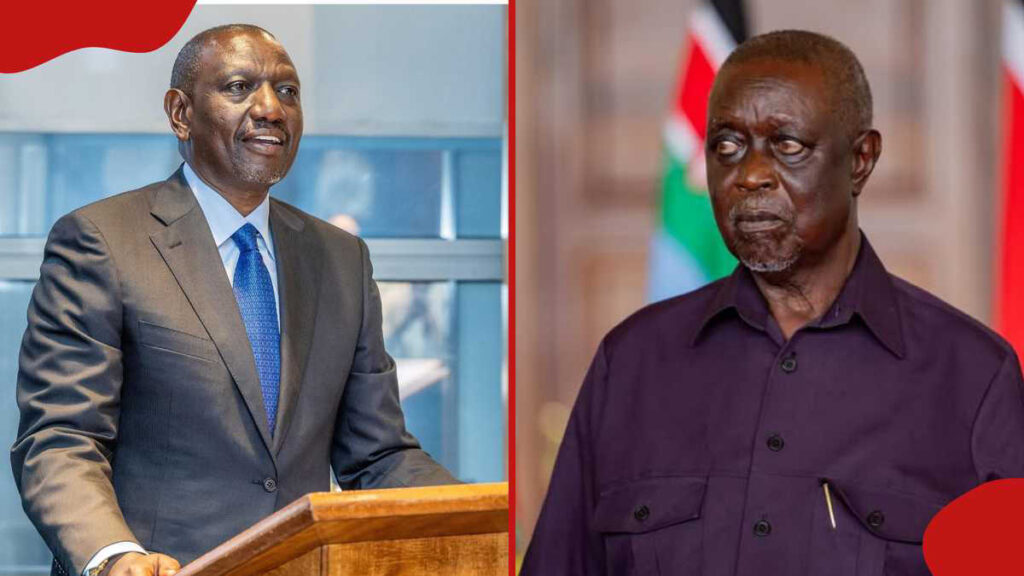
KISUMU, KENYA – In a move that has sent ripples through the Kenyan political landscape, the Orange Democratic Movement (ODM) has officially clarified its stance regarding the Deputy President’s position in the evolving “broad-based” government framework.
Speaking from the political bedrock of Kisumu, senior ODM stalwart and elder statesman Dr. Oburu Oginga declared that the party has no intentions of displacing the current Deputy President, Prof. Kithure Kindiki, ahead of the 2027 General Election.
The announcement comes at a time of heightened political speculation as the “marriage of convenience” between President William Ruto’s United Democratic Alliance (UDA) and Raila Odinga’s ODM continues to reshape the nation’s power dynamics.
The “Kindiki Reassurance”
Addressing a gathering during the distribution of business capital under the government’s “Nyota” Treasury program, Dr. Oburu Oginga addressed the “elephant in the room”: the fate of the Deputy Presidency.
Since the inclusion of several ODM luminaries into President Ruto’s Cabinet, rumors had been rife that the Orange party was eyeing the second-highest office in the land as part of a pre-election pact.
“We are not going to look for less, but Deputy President, do not think that we want your seat,” Oburu stated, directly addressing Prof. Kithure Kindiki. “Please, you are our friend. As we negotiate, we are going to negotiate for what our people deserve.”
This statement is seen by many analysts as a strategic move to de-escalate tensions within the Kenya Kwanza camp.
Following the impeachment of Rigathi Gachagua and the subsequent appointment of Kindiki, there has been a palpable anxiety among UDA’s Mt. Kenya allies that the entry of ODM might lead to a further dilution of their influence.
By publicly “wiping the sweat” off Kindiki’s brow, Oburu signaled that ODM’s interests lie in policy influence and ministerial control rather than an immediate pursuit of the DP’s residence in Karen.
Beyond the Surface: Negotiating the “National Cake”
While the Deputy Presidency may be off the table for now, Dr. Oburu was clear that ODM’s cooperation is not a blank check. He emphasized that the party is focused on securing “significant stakes” in the next administration.
Currently, ODM enjoys a presence in the Cabinet through key portfolios such as the National Treasury, Mining and Blue Economy, and Co-operatives and MSME Development. However, Oburu hinted that the party is looking for a more expansive share of the “national cake” as they move toward 2027.
“We are not going to take anybody’s share,” Oburu explained. “We are only going to make sure that everybody gets their fair share.”
This rhetoric underscores ODM’s transition from a traditional opposition role to a “partner in governance,” focusing on resource allocation and development projects for its traditional strongholds in Nyanza, Western, and the Coast.
President Ruto: “Kenya is Stronger with ODM”
Sharing the podium with the ODM elder, President William Ruto appeared to relish the new political alliance. The President, who once faced fierce opposition from the “Chungwa” (Orange) party, now champions the partnership as the key to national stability.
“We were UDA, but with the ODM family, the country is stronger. The country is more stable,” President Ruto told the cheering crowd. He dismissed the threat of renewed anti-government protests, stating that with this new unity, the era of “Maandamano” (protests) is effectively over. “We are not boarding [the protest train]. We are moving forward together.”
Ruto’s strategy appears twofold: first, to neutralize the opposition by absorbing its most potent elements, and second, to create a formidable political juggernaut that can withstand any internal rebellion from his own party’s disgruntled factions.
A Scathing Attack on the Remnant Opposition
The Kisumu event also served as a platform for both Ruto and Oburu to launch a coordinated attack on the remaining opposition leaders who have refused to join the broad-based government. The President did not mince words, labeling the remaining critics as “leaderless, agendaless, and planless.”
“I don’t see them campaigning anywhere. They are just in one region, in one area,” Oburu added, mocking the localized nature of the current opposition. The critique suggests that without the machinery and grassroots reach of Raila Odinga’s ODM, the remaining opposition figures—largely drawn from the Wiper Party and sections of the former Jubilee Party—face an uphill battle in remaining nationally relevant.
The Road to 2027: A New Political Order?
The implications of ODM’s “silence breaking” are profound for the 2027 electoral cycle.
By ruling out a bid for the Deputy Presidency, ODM avoids a direct confrontation with the Mt. Kenya voting bloc, which views the DP position as its primary link to the executive.
This could be a tactical retreat to ensure that the broader alliance remains intact while ODM focuses on consolidating its influence within the civil service and state corporations.
However, political observers remain cautious. In Kenyan politics, “never” is often a temporary state.
While Oburu Oginga has offered Kindiki a reprieve, the true test of this alliance will come when the formal coalition agreement for 2027 is drafted.
For now, the message from Kisumu is clear: The UDA-ODM partnership is no longer just a cabinet reshuffle—it is a burgeoning political movement aimed at dominating the 2027 landscape.
By prioritizing “substance over titles,” ODM is positioning itself as a silent power broker, content to let others hold the ceremonial titles while they hold the keys to the Treasury and the nation’s economic engine.
As the negotiations continue, the rest of the country watches to see if this “broad-based” experiment will bring the promised stability or if the internal competition for the “national cake” will eventually lead to a fresh round of political friction.

Stateupdate Media Group |SMG
Contributor at State Update.
Related News
SHA Unveils a New Framework Allowing Kenyans to Seek Medical Services Abroad For Conditions Unavailable Locally

Residents of US Ebola Centre in Kenya Proposed Center Break Silence

Suspects in Ong’ondo Were Murder Released As Case Takes a New Shift

Meru Land Official Arrested for Soliciting Bribes
Raphael Tuju Opens Up on Jubilee Exit and 2027 Political Plans

Money Making Business Opportunities for University Students in 2025
Latest News

Martha Karua Set to Grace Nakuru as PLP Opens New Offices, Farmers Party Joins Opposition Camp
Ugandans in Kenya Warned After Ruto’s Urgent Directive
Mount Kenya Hawkers Accused of Double Standards Over Ruto’s Foreign Traders Directive: Senator Samson Cherargei Sparks Debate
CS Joho and MP Sudi Deliver Ruto’s Condolences to Tanzania’s President Samia
Kenyans In Burundi Sent A Strong Message By The Government