Autopsy Bombshell: Shocking New Details Emerge in Chilling Murder of MP Charles Ong’ondo Were

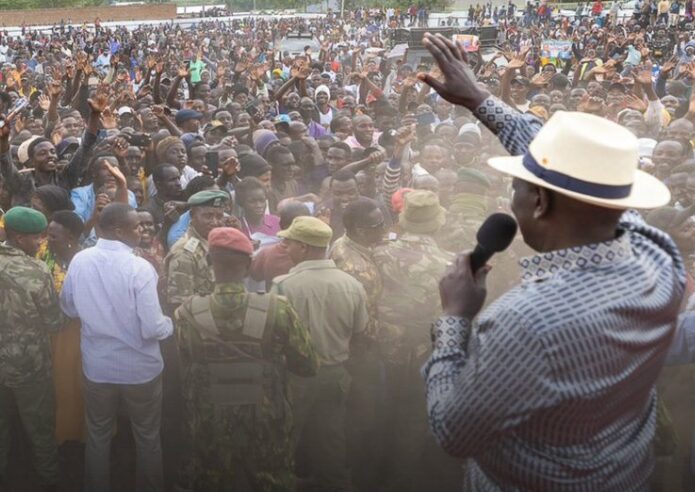
In a dramatic twist to the high-profile murder of Kasipul Member of Parliament Charles Ong’ondo Were, a postmortem report has revealed brutal details about how the lawmaker was executed in cold blood.
The revelations, disclosed by government pathologist Dr. Johansen Oduor at Lee Funeral Home on May 2, have added new layers of complexity to a case that has already gripped the nation.
Dr. Oduor confirmed that the MP, who was gunned down on April 30 along Ngong Road near the Nairobi Funeral Home roundabout, was shot five times in a calculated attack. Of the five bullets, three remained embedded in his body, a chilling indication of the precision and intent of his killers.
“Two bullets struck his left forearm,” Dr. Oduor stated. “One of those bullets exited, but the other lodged deep within the forearm.” Forensic experts believe this injury suggests the MP may have instinctively raised his arm to shield himself or could have been on a phone call at the time of the attack.
However, it was the next set of injuries that confirmed the sheer lethality of the ambush. Two additional bullets pierced the left side of Were’s chest.
While one exited through the right side, the other traveled a deadly path through critical organs—including the heart, lungs, liver, and the aorta—before embedding itself in the spine. Another bullet struck his upper back and remained lodged inside.
“These injuries were incompatible with life,” Dr. Oduor concluded. “He died from multiple gunshot wounds that damaged vital organs. No other physical injuries were found.”
The bullets retrieved during the autopsy have been handed over to ballistics experts for forensic analysis, which could provide key leads in identifying the firearm and tracing its source. Meanwhile, detectives have begun piecing together the movements of the suspects and the timeline of the assassination.
Eyewitnesses reported that the MP’s vehicle was ambushed in a high-risk zone near the Nairobi Funeral Home roundabout by gunmen on a motorcycle. One of the attackers reportedly fired multiple shots through the car window at close range before fleeing.
In a swift police operation, four men were arrested in connection with the killing. The suspects—William Imoli Shighali, Juma Ali Haikai, Douglas Muchiri Wambugu, and David Mihigo Kagame—were arraigned at the JKIA Law Courts. The court granted police 30 more days to hold the suspects as investigations intensify. Each suspect is being detained in separate police stations, including Ruaraka, Kilimani, Capitol Hill, and Muthaiga.
Shighali, Haikai, and Kagame were arrested together in Roysambu, Nairobi, in a dramatic early morning operation. After his arrest, Shighali led officers to his residence in Umoja II estate, where authorities discovered $4,800 (approximately Ksh620,000) in cash, suspected to be part of the murder-for-hire payment. Also recovered was a spent cartridge that will now be analyzed alongside other ballistic evidence.
Further investigation led detectives to Haikai, who was allegedly in possession of a motorcycle believed to have been used by the gunmen. A vehicle, also thought to have been used to drop off and trail the MP, was recovered at his location. Police believe the car was used to drop Haikai near Parliament, where the trail on the MP began.
In a dramatic twist, Haikai claimed he is a serving police officer. The validity of this claim is now under investigation after police raided his home and recovered suspicious items, including a police uniform, nine rounds of live ammunition, eight tear gas canisters, and a pair of shoes that allegedly match CCTV footage of the gunman.
Despite these crucial developments, investigators are still searching for the murder weapon. This missing piece of the puzzle is vital to securing a solid case in court and uncovering whether a wider network may have been involved.
The late MP’s remains are scheduled to be flown to his rural home in Homa Bay for burial on May 9. Meanwhile, the nation watches closely as the investigation unfolds, with many Kenyans demanding swift justice and deeper answers behind the politically sensitive killing.
The assassination of Charles Ong’ondo Were has reignited debates about political violence in the country and raised fears about the safety of public officials. As detectives continue combing through surveillance footage, forensic evidence, and financial trails, one thing remains clear—this was no random act of violence, but a meticulously planned execution.
Stay with us for exclusive updates as the mystery deepens and authorities race against time to bring the killers to justice.

Stateupdate Media Group |SMG
Contributor at State Update.
Related News

Senior School Placement 2025: How to Check Your Child’s Grade 10 School After KJSEA Exams
Who Killed PCEA Minister? New Twist As Angry Gachagua Makes Worrying Remarks

TSC Announces Vacancies for Senior Principal and Senior Lecturer Positions
MP Sankok Claims Credit for Ruto’s Vaccine Initiative While Calling Raila the ‘Longest-Serving President’
List of Required Documents to Be Submitted to TSC Headquarters for Recruitment of Junior Secondary School Teachers on PnP Terms

You Are Being Underpaid! Phyllis Wakiaga Reveals the Secret Formula Shocking Kenyan Employers!
Latest News

Martha Karua Set to Grace Nakuru as PLP Opens New Offices, Farmers Party Joins Opposition Camp
Ugandans in Kenya Warned After Ruto’s Urgent Directive
Mount Kenya Hawkers Accused of Double Standards Over Ruto’s Foreign Traders Directive: Senator Samson Cherargei Sparks Debate
CS Joho and MP Sudi Deliver Ruto’s Condolences to Tanzania’s President Samia
Kenyans In Burundi Sent A Strong Message By The Government